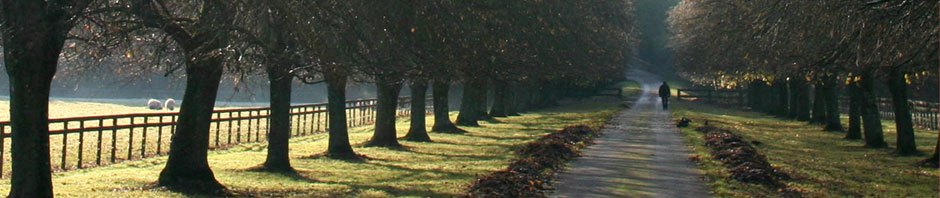
There’s a specific kind of quiet that creeps in around 2 p.m. on a Sunday. Not the gentle quiet of a morning meditation or the tired, satisfied hush after a long run. This one is heavier. It sits in the apartment like a third roommate, judging the half-folded laundry, the inbox I haven’t touched, the guitar in the corner that’s been gathering dust for three weeks. I’m on the couch, and I’m doing nothing. Not the restorative nothing of a nap, but the restless, itchy nothing of a man who feels he should be doing something. Anything. That’s the knot I’m trying to untangle here: the difficulty of being alone without being productive, and the strange, sticky guilt that comes with it.

The Productivity Ghost That Haunts My Solitude
I’ve always been good at being alone. Introvert by nature, solitude is where I go to breathe. After a stretch of socializing, I crave it like water. But somewhere along the way, my solitude got hijacked. It stopped being about being and started being about doing. A quiet Saturday morning wasn’t a blank canvas for rest anymore; it was a block of time to write three blog posts, reorganize the kitchen cabinets, and finally figure out how to fold a fitted sheet without it looking like a crumpled mess. If I didn’t come out of my alone time with something to show for it, I felt like I’d blown it.
There’s a ghost whispering that my worth equals my output. It says, You’re alone. No friends to entertain, no meetings, no outside demands. So every second should be optimized. The logic is brutal: you have the space, so you should be creating, fixing, improving. If you’re not, you’re failing. I’ve spent years listening to that ghost. I built a whole identity around it—Andrew Jericho, the guy who gets things done, the man who turns solitude into art. But lately, I’ve been trying to let the ghost go. And honestly? It’s terrifying.
The Afternoon I Stared at a Wall
Last Tuesday, I hit a wall. Literally. I sat on my floor and stared at the wall for forty-five minutes. I’d cleared my schedule to work on a new project, but the words wouldn’t come. The ideas felt stale, reheated. My usual trick—forcing myself to just start typing, anything, even garbage—didn’t work. So I stopped. I sat there, back against the cold plaster, and did nothing.
The guilt hit first, a wave of it. My phone buzzed with an email I could answer. A book I’d been meaning to read sat on the shelf. A dozen small tasks chirped at me from the back of my mind. But I didn’t move. I just watched the afternoon light shift across the wall, slow and gold. And something cracked open. The tightness in my chest, the one I’d been carrying for weeks, started to loosen. I wasn’t producing anything. I wasn’t improving myself. I was just existing. And for a moment, that felt like enough.
That’s the hard part: letting yourself be alone without turning the solitude into a project. We live in a culture that worships the hustle, that turns every hobby into a side gig, that demands we optimize our mornings, our evenings, our sleep. To simply be is a small act of rebellion. And I’m still pretty bad at it.

The Fear of Wasted Time
Why is it so hard to be alone and unproductive? I think it boils down to a fear of wasted time. Time is the one thing we can’t get back. Every moment spent staring out a window is a moment not spent writing, not spent building, not spent moving forward. But forward toward what? That’s the question I rarely stop to ask.
I have a friend, a painter, who once told me her best work comes after long stretches of what she calls “fallow time.” She spends days just walking, cooking, sitting in cafes watching people. No sketching. No brainstorming. She lets her mind lie fallow, like a field between harvests. She trusts that the soil is replenishing itself, even if nothing visible is growing. I think about her when the guilt creeps in. Maybe my wall-staring wasn’t a waste. Maybe it was fallow time. Maybe my mind was composting old ideas into something richer, something I can’t see yet.
But trusting that process is hard when you can’t measure it. We’re addicted to metrics. Word counts. Steps walked. Tasks checked off. Being alone without producing anything offers no data to soothe the anxious brain. It’s a leap of faith into the invisible.
Loneliness vs. Solitude vs. Unproductive Aloneness
It’s worth separating loneliness from this particular kind of solitude. Loneliness is a feeling of lack—a yearning for connection. What I’m describing is different. I don’t feel lonely when I’m alone. I feel exposed. Without the buffer of activity, I’m left face-to-face with myself. And sometimes, I don’t like what I see. I see the procrastinator, the perfectionist, the man who is quietly terrified of being mediocre. Productivity was my shield. As long as I was busy, I didn’t have to sit with those uncomfortable truths.
Unproductive solitude strips the shield away. It forces me to ask: who am I when I’m not doing? What is my value when I’m not making? These aren’t easy questions. They lead into quiet, tangled places. But I’m starting to believe they’re necessary. Maybe the only way to find a self that isn’t defined by output is to spend time in that unproductive space and let the discomfort teach me something.
Practical Experiments in Doing Nothing
I’ve been trying, in small ways, to practice this. I call them experiments because that word gives my productivity-obsessed brain a loophole. I’m not wasting time; I’m experimenting. Here are a few things I’ve tried:
1. The No-Input Hour
One hour a day, I put away all inputs. No phone, no book, no music, no podcast. I don’t meditate. I don’t journal. I just sit. Sometimes on the couch, sometimes on the floor, sometimes on the fire escape. The first few times, I felt like I was crawling out of my skin. My brain screamed for stimulation. But after a week, the hour started to feel spacious instead of empty. I noticed the sounds of my apartment—the hum of the refrigerator, the creak of the floorboards. I noticed my own breathing. It was boring. And that was the point.
2. Walking Without a Destination or a Podcast
I used to walk for exercise, always tracking my steps, always listening to something educational. Now, once a week, I walk without a goal. No step count. No audiobook. I just walk until I feel like stopping. Sometimes I end up in a park watching dogs. Sometimes I sit on a bench and do nothing. These walks feel wasteful. And that’s exactly why I need them.
3. The Unfinished Project
I started a woodworking project—a small box—with the intention of never finishing it. I sand it sometimes. I stare at it. I put it away. The point is not the box. The point is to do something without a deadline, without a plan, without the pressure of completion. It’s a physical reminder that not everything needs to be finished. Not everything needs to be shared. Some things can just be.

The Cultural Pressure to Perform
I’m not alone in this struggle. I see it everywhere. Social media is a highlight reel of accomplishments. Side hustles are glorified. Rest is marketed as a productivity hack—something you do so you can work better, not something you do for its own sake. Even our leisure is competitive. We don’t just read; we set Goodreads challenges. We don’t just run; we post our splits on Strava. We’ve turned our private lives into public scorecards.
This makes unproductive solitude feel almost shameful. If no one sees what you’re doing, does it even count? If you have nothing to show for your Saturday, did it even happen? I’m trying to unlearn that. I’m trying to believe that my life has value beyond what I produce, beyond what I post, beyond what I can summarize in a tweet or a blog entry. It’s a quiet, radical belief. And I have to keep reminding myself of it.
The Irony of Writing About Unproductivity
There’s an obvious irony here. I’m writing an article about the difficulty of being alone without being productive. And in writing it, I am being productive. I’m turning my unproductive struggle into content. The ghost of productivity is clever; it finds ways to commodify even my resistance to it. I don’t have a tidy solution for this. Maybe the act of writing is my way of processing, and that’s okay. Maybe the line between reflection and production is blurrier than I think. But I’m aware of the tension. I’m trying not to let the article become just another checkbox on my to-do list.
What I’m Learning (Slowly)
I’m learning that being alone without being productive is a skill. It’s a muscle I’ve let atrophy. Rebuilding it is uncomfortable, like starting to exercise after years of sitting still. Some days, I can only manage ten minutes of genuine, unstructured solitude before the anxiety creeps in. Other days, I find a strange peace in it. I’m learning that my worth is not my word count. I’m learning that the world doesn’t end when I stop optimizing every moment.
I’m also learning that this is deeply personal. What works for me might not work for you. Some people thrive on constant activity and feel restless in stillness. But I suspect many of us, especially those drawn to creative or intellectual work, have forgotten how to simply be. We’ve internalized the idea that our value is tied to our output. And that’s a heavy thing to carry.
Frequently Asked Questions
Isn’t being alone and unproductive just laziness?
I used to think so. But there’s a difference between laziness and intentional rest. Laziness, for me, is avoiding something I know I need to do, usually with a side of guilt and distraction. What I’m describing is a conscious choice to be still, to let my mind wander without a goal. It’s not about dodging work; it’s about making space for something other than work. The guilt is the hard part to unlearn.
How do you start practicing unproductive solitude if it makes you anxious?
Start small. Really small. Try five minutes of sitting without your phone, without a book, without any input. Don’t try to meditate or control your thoughts. Just sit. If five minutes is too much, try two. The goal isn’t to achieve a state of zen; it’s to get comfortable with the discomfort. Over time, the anxiety lessens. You start to trust that the world won’t fall apart if you’re not doing something for a few minutes.
Doesn’t this go against the idea of being a productive, successful person?
It depends on how you define success. If success is only about output, then yes, unproductive time seems like a waste. But I’m starting to question that definition. What if success includes being a whole person? What if it includes knowing yourself beyond your accomplishments? I don’t have a neat answer. But I’m beginning to think that the moments I spend doing nothing are not taking away from my success; they’re adding to my sanity. And sanity is a kind of success too.
Closing Thoughts
I wrote this article on a Sunday afternoon, the same kind of afternoon that usually fills me with a low-grade panic about all the things I should be doing. But today, I let the panic sit beside me without letting it drive. I took breaks to stare out the window. I didn’t check my word count obsessively. I’m not sure this is a better way to write, but it felt more human. And maybe that’s the point. Maybe being alone without being productive is not a problem to solve but a state to inhabit, a quiet rebellion against the tyranny of the to-do list. I’m still learning. I’ll probably be learning for the rest of my life. And that’s okay.
If you’ve felt this too—the guilt of an unproductive afternoon, the restlessness of your own company—I hope you’ll give yourself permission to just be. Not to meditate, not to journal, not to “work on yourself.” Just to be. It’s harder than it sounds. But maybe that’s why it matters.