
Why I Deleted All Productivity Apps From My Phone

Three weeks ago, I sat on the edge of my bed at 6:47 a.m., thumb hovering over a grid of icons that promised to fix me. There was a habit tracker with a satisfying checkmark animation, a to-do app that chirped like a contented sparrow when I finished a task, a calendar that color-coded my waking hours into neat little blocks of virtue. I had spent forty-three dollars on subscriptions that month alone, and I was still staring at the ceiling at midnight, wondering where the day had gone. So I did something that felt like cutting off a limb: I deleted every single one of them. No backup, no farewell tour. Just a long press and that jiggling X, over and over, until my home screen looked like a vacant lot.

This isn’t a manifesto about digital detox. I’m not here to tell you that apps are evil and we should all return to stone tablets. I’m writing this because I need to understand what happened to me, and maybe you’ll see something of yourself in the rubble. The short version is that productivity apps made me less productive, but the longer version is sadder and more honest: they became a substitute for the life I was too scared to live.

A person staring at a smartphone screen with a troubled expression in a dark room
Morning light, phone in hand, and the quiet dread of another day I wasn’t ready to meet.

The Morning I Counted My Tools

Let me paint you a picture of the absurdity. On a random Tuesday, I opened my phone and tallied the apps that claimed to help me “get things done.” There were eleven of them. Eleven applications, each with its own philosophy, its own notification schedule, its own dashboard of metrics that told me how well I was performing at being a human. I had a Pomodoro timer that beeped every twenty-five minutes, a journaling app that prompted me to list three gratitudes before I’d even brushed my teeth, and a project management board that I’d set up for planning weekend meals. I was treating a Tuesday-night pasta dinner like the launch of a satellite.

The worst part was the checking. I checked them the way some people check their ex’s Instagram—compulsively, with a mix of hope and dread. I’d finish a task not because it mattered, but because I wanted to see the completion percentage tick upward. I’d rearrange digital sticky notes at 11 p.m. instead of sleeping, convinced that if I could just get the categories right, tomorrow would be different. Tomorrow never was. The apps had become a second job, and the paycheck was a fleeting sense of control that evaporated the moment I looked at my actual life.

The Honest, Uncomfortable Why

For a long time, I told myself I was just a scattered guy who needed better scaffolding. That’s a comfortable story, because it implies the problem is external—something I can solve with a download and a seven-day free trial. But if I’m being brutally honest, which I’m trying to be here, the productivity apps were a shield. They let me feel like I was working without ever having to risk anything real. Planning is safe. Doing is terrifying. When you’re color-coding a calendar, you’re not writing the book that might get rejected, or having the conversation that might end badly, or sitting with the silence that might tell you something you don’t want to hear.

I think I knew this on some level, because I started noticing a pattern. On days when I was anxious about a creative project, I’d suddenly discover an urgent need to reorganize my task categories. When I was avoiding a difficult email, I’d spend forty minutes researching a new note-taking app that would “change everything.” The apps weren’t tools; they were procrastination in a sharp suit. And the more I leaned on them, the more I distrusted my own ability to just know what needed to be done and do it.

A smartphone lying face down on a wooden desk beside a cup of coffee and an open notebook
The phone, silent and still, finally behaving like an object instead of a demanding boss.

The Quiet After the Delete

The first day without the apps was disorienting in a physical way. I kept reaching for my phone out of muscle memory, only to realize there was nothing to check. No green checkmarks, no progress bars, no gentle nudges asking if I’d completed my morning routine. I felt untethered, like an astronaut who’d cut the cord and was now floating in the vast, terrifying silence of my own mind. I had to remember what I wanted to do without being told. That sounds simple, but it was actually one of the hardest things I’ve done in years.

I started keeping a single paper list on a notepad I bought for two dollars at a drugstore. It’s ugly. I cross things out with a pen and sometimes the ink bleeds through. There’s no cloud sync, no reminder if I forget to look at it, no satisfying animation when I finish a task. But here’s what I noticed within three days: I was finishing things. Not because a notification badgered me, but because the list was there, on my desk, a silent witness, and I wanted to see fewer words on it by evening. The act of writing something down, with my actual hand, felt more like a contract than typing into a text field ever did.

The Unexpected Gift of Boredom

Something else happened that I didn’t anticipate. Without the apps to fill every micro-gap of my day, I got bored. Truly, deeply bored. Standing in line at the grocery store, waiting for water to boil, sitting at a red light. And in those spaces, my brain started doing something it hadn’t done in a while: it wandered. I thought about a conversation I’d had with my brother five years ago. I remembered a melody I’d scribbled on a napkin and lost. I realized I was unhappy with a friendship I’d been maintaining out of obligation. These weren’t productive thoughts in the traditional sense, but they were real, and they’d been crowded out by the constant hum of optimization.

I’m not romanticizing boredom. Some of it was just uncomfortable. But I started to see that my phone had become a pacifier, something I reached for the moment any negative emotion surfaced. Anxiety about a deadline? Open the task manager. Worried I’m wasting my life? Check the habit tracker. The apps promised to soothe, but they only postponed the reckoning. Sitting with the discomfort, even for five minutes, was like letting a wound breathe. It hurt, but it also started to heal.

A close-up of a person writing with a pen in a simple notebook, morning light falling across the page
Two dollars, no notifications, and more honesty than any app ever gave me.

What I’m Learning (Slowly, Painfully)

I’m three weeks into this experiment, and I won’t pretend I’ve become a paragon of focus. I still waste time. I still avoid hard things. But the quality of my avoidance has changed. Now, when I procrastinate, I know I’m doing it. There’s no app to dress it up as “reviewing my weekly goals.” I’ll scroll Twitter for twenty minutes, and then I’ll feel a little sick, and then I’ll stop. That’s progress, in a backward sort of way. At least I’m not lying to myself.

The biggest shift has been in how I relate to my own intentions. Instead of outsourcing my priorities to an algorithm that sorts tasks by “urgency” or “impact,” I’m forced to sit with the question: What actually matters today? Not what feels productive, not what will give me a clean dashboard, but what will move the needle on the life I’m trying to build. Some days the answer is writing. Some days it’s calling my mom. Some days it’s admitting I’m exhausted and taking a nap. There’s no app for that kind of discernment. There’s just me, a pen, and the slow, daily practice of listening to myself.

The Danger of the Middleman

Here’s a thought I keep coming back to: every app is a middleman between me and my life. A middleman who wants my attention, my data, my subscription fee, and my belief that I can’t function without it. The more I let the middleman mediate, the less I trust my own judgment. And the less I trust my own judgment, the more I need the middleman. It’s a tidy little cycle, and I was stuck deep inside it. Breaking out felt like learning to walk again, but it also felt like reclaiming something I didn’t know I’d given away: the simple dignity of deciding what to do and then doing it, without an audience of pixels applauding my every move.

I’m not saying you should delete your apps. Maybe you’ve found a system that works, and it genuinely supports your life rather than consuming it. But if you have a gnawing suspicion that your productivity tools are actually just another form of busyness, maybe try this: delete one of them for a week. Not the one you hate, but the one you love most, the one you think you can’t live without. See what rushes into the space it leaves behind. You might find terror, or boredom, or grief, or a book idea you’d been smothering with to-do lists. Whatever it is, it’s probably more true than the green checkmarks ever were.

FAQ: Life After the Uninstall

Do you miss anything about the apps?

I miss the illusion of control, honestly. There was a deep comfort in seeing my day laid out in neat blocks, even if I never stuck to the plan. But I don’t miss the anxiety of falling behind on a system that was supposed to serve me. The trade-off has been worth it: I traded a false sense of order for a messy but real sense of presence.

How do you keep track of everything now?

I use one paper notebook and a simple calendar for appointments. That’s it. The notebook has a running daily list, and I transfer anything unfinished to the next day. It’s not pretty, but it forces me to be honest about what I’m actually committing to. I can’t hide a hundred tasks in a digital folder and pretend they’re all getting done.

What if you need a reminder for something important?

I set an alarm in my phone’s default clock app. One alarm, one label. It’s jarring when it goes off, but that’s the point: a reminder should be a sharp nudge, not a persistent background hum that I learn to ignore. I’ve found that using fewer, louder signals makes me more responsive, not less.

Isn’t this just a different kind of productivity system?

Maybe. I’ve thought about that. But the difference, for me, is that a paper list doesn’t have a business model. It doesn’t want my attention or my money or my habit formation. It’s just a tool, in the way a hammer is a tool. I pick it up when I need it, and I put it down when I’m done. That’s the relationship I’m trying to cultivate with all my tools—human, humble, and interruptible.

Posted in Uncategorized | Comments Off on Why I Deleted All Productivity Apps From My Phone

The Morning I Killed My To-Do List

I remember the exact moment it all cracked open. Tuesday, 6:15 a.m. I was on the edge of the mattress, still in the dark, phone glowing. Three to-do apps stared back at me. One had color-coded labels. Another chimed little encouragements like a well-meaning grandmother. The third was my “capture everything” inbox—a cemetery of stray thoughts from last winter. Teeth unbrushed. Coffee unmade. Exhausted already, thumb scrolling through tasks I’d invented just to feel efficient. That was the morning I deleted every last productivity app from my phone.

The App Trap I Built for Myself

It started innocently enough. A couple years ago, I grabbed a checklist app because I kept forgetting dish soap. The little checkbox felt great—that swoosh sound, a tiny victory before eggs. Then a habit tracker, because I wanted to meditate daily. Then a Pomodoro timer, because some blog swore focused bursts would change my life. Soon my home screen looked like a cockpit I’d never asked for: time-blocking, note-taking, project management, even an app that turned drinking water into a game. I was losing.

Person sitting on a bed looking at a smartphone with a tired expression

The irony stung. I spent more time curating my productivity shrine than actually making things. Open the phone to jot an idea, get sidetracked by a notification that I hadn’t logged my sandwich. Schedule a focused block, then burn the first ten minutes reshuffling task categories. My days became a performance—curtain up for nobody but the apps themselves. Stagehand and audience, and the show never really began.

I think many of us slide here without realizing. We’re told more organization means more freedom, but the tools quietly become the work. They ask us to translate our messy human intentions into due dates and priority flags and repeating templates. Somewhere along the line, I stopped asking what I actually wanted to do and started asking what the app expected next. That’s not a tool serving me. That’s me serving a tool.

The Quiet Violence of Constant Optimization

What really rattled me was how the apps rewired my internal clock. I’d walk through the park, light slicing through the leaves, and instead of just seeing it, I’d draft a task: “Schedule 20 minutes outside daily.” I was bullet-pointing my life before I’d lived it. The productivity mindset had colonized my quiet. It whispered that everything—even joy—could be tracked, improved, made more efficient.

Smartphone lying face down on a wooden table next to a notebook and pen

I later stumbled on a phrase that landed hard: toxic productivity. That gnawing need to be productive every waking second, to measure worth in checked boxes, to feel guilty when you’re just… being. The apps didn’t create it, but they gave it a frictionless, beautiful home. Every swipe and tap said my time was a grid to fill, not a current to ride. I started feeling like a machine endlessly calibrating itself, never actually running.

One evening, I marked a book “read” in my tracker, added a star rating and a note. Mid-type, I realized I couldn’t remember what the book made me feel. I only had the data. That was a quiet heartbreak. I’d optimized my way out of the experience.

The Day I Hit Delete

That Tuesday, no dramatic plan. I just held my thumb on the first icon till it wiggled, tapped the little x. Then the next. And the next. Two minutes, maybe. To-do lists, habit tracker, Pomodoro timer, project board, meal planner, focus-music app that had somehow become its own chore—gone. My screen looked naked. Hollow panic hit, like I’d tossed my external brain. But underneath: relief so physical it felt like unclenching a fist I’d forgotten I was making.

I didn’t replace them. No minimalist bullet journal. No “all-in-one” solution. I just stopped. Pocket notebook and a pen. I wrote things down without categories or checkboxes. If I forgot something, I forgot it. The world didn’t end. I started remembering more, because I wasn’t outsourcing my memory to a machine that only pinged me at the proper time.

What I Found in the Emptiness

The first days were disorienting. I’d grab my phone out of habit, thumb searching for an app that didn’t exist. A task would drift through my mind—write that down quick before you lose it—and there was no bucket for it except my own attention. But attention, I learned, is roomier than I thought. Ideas didn’t vanish. They lingered, deepened, or faded if they didn’t matter. I started trusting my own mind again.

Person writing in a notebook at a sunlit desk with a cup of coffee

Mornings shifted hard. Instead of opening a screen full of obligations, I’d sit with coffee and let my mind drift. I’d ask myself, “What do I actually want to do today?” Not what I had to, not what past-me scheduled two weeks ago, but what felt alive in that moment. Some days, work. Some days, a long walk or a call with a friend. The point wasn’t to shirk responsibility but to use my own desires as a compass, not a list curated by a version of me who couldn’t know what today would feel like.

I also started finishing more. Without the apps, I couldn’t maintain a sprawling, guilt-soaked list of 47 tasks. I could only hold a few in my head, so I did those few. The rest waited or evaporated. And here’s the weird part: I didn’t fall behind. Most of those 47 tasks were filler—busywork I’d invented to feel productive. When I stopped tracking them, they stopped mattering. The essential stuff rose naturally because it had to.

The Unexpected Gift of Boredom

One of the quietest losses of a productivity-app-saturated life is the death of boredom. Every spare moment used to be a chance to optimize. Waiting in line? Check tasks. Commercial break? Log a habit. But boredom is where unexpected thoughts surface. It’s the gap where your mind makes sideways connections, where daydreams turn into ideas you’d never schedule. Without the apps filling every crack, I got bored again. And in that boredom, I wrote more, thought deeper, paid attention to the world with something close to a child’s eyes.

I’m not claiming this is a cure-all. I still use a calendar—appointments, deadlines need structure. But the calendar is dumb. It doesn’t nudge or gamify. It just holds time. For everything else, I’ve returned to a simpler tool: paper and a willingness to let things be imperfect.

Why This Isn’t a Call for Everyone to Delete Their Apps

Let me be careful here. This isn’t a manifesto against digital tools. For some, productivity apps are genuinely helpful, even life-changing—especially for those managing ADHD, complex projects, or disabilities that make memory and organization tough. What I’m describing is my own spiral, the way a tool became a tyrant because of my particular hunger for perfectionism and self-measurement. The problem wasn’t the apps; it was my relationship with them. They fed a belief that I needed fixing, that my natural way of moving through the world was broken without a system to manage it.

That belief is worth questioning. Not by downloading a better app, but by sitting still and asking what you’re really chasing. More presence? More creativity? Peace? An app can’t give you those. At best, it can clear some space—but if the app itself fills the space, it’s become the obstacle.

What I Do Now Instead

These days, my “system” is laughably simple. Each morning, I scribble one to three things I’d like to accomplish on a notecard. No apps, no sync, no notifications. If I do them, great. If I don’t, I ask myself why—and that question often teaches me more than any analytics dashboard ever did. I keep a paper journal for thoughts that need untangling. I use my phone for calls, messages, music, occasionally a camera. That’s it.

The result isn’t that I’m more productive by any standard yardstick. I probably check off fewer boxes. But I feel more here. My life belongs to me again, not to a collection of well-designed interfaces that promised mastery. There’s a quiet dignity in doing one thing at a time, slowly, without tracking or sharing or turning it into a metric. It’s enough just to do it.

Frequently Asked Questions

Did you lose track of important tasks without the apps?

Surprisingly, no. At first, I missed a few small things—like returning a library book on time. But the truly important tasks, the ones with real weight or deep personal meaning, stayed in my mind because they mattered. I also started using a simple paper notecard each day, which helped without the digital noise. The fear of forgetting everything turned out to be mostly a phantom conjured by the apps themselves.

What if I need a productivity app for work or collaborative projects?

That’s a real need, and I’m not against tools that genuinely serve a shared purpose. The distinction for me was between tools required by my job and tools I’d willingly invited into my personal life. If your team uses a project management app, that’s different from running five personal to-do lists in parallel. The key is noticing when a work tool starts bleeding into your private time and setting a fence around it.

How do you stay motivated without habit trackers and streaks?

I’ve found that motivation built on external rewards—streaks, badges—is brittle. Miss a day, break the chain, and I tend to ditch the habit entirely. Now, I focus on how an activity makes me feel right now. If I want to write, I write because it feels good, not because an app says I’ve done it for 47 days straight. That quieter, internal pull is much more durable. And if I drift from a habit, I can pick it up again without the shame of a broken record.

This doesn’t have a tidy ending. I still have days that feel scattered and unproductive. I still sometimes miss the illusion of control the apps gave me. But I’ve learned to trust something deeper: my own attention, my own desires, my own ability to show up for what truly counts. That trust doesn’t fit in an app, and I’m finally okay with that.

Posted in Uncategorized | Comments Off on The Morning I Killed My To-Do List

On the Fear of Being Boring After Leaving an Impressive Job

There’s a quiet, gnawing fear that settled in my chest the day I walked out of the office for the last time. It wasn’t the fear of going broke or losing my daily rhythm—though those ghosts paid their visits, too. It was the fear that I was about to become excruciatingly, irreversibly boring. That without the title, the desk, the keycard, I would simply fade into a gray, unremarkable version of myself. That the stories worth telling had already been told, and all that remained was the slow, polite decline into someone who talks about lawn care with genuine passion.

I’m Andrew. For years, I wore a job that people recognized. It opened doors and invited nods at dinner parties. When someone asked what I did, the answer came easily, and it carried a certain weight. I could see the flicker of interest in their eyes. Then I left. Not because I was fired or forced out, but because something inside me had grown quiet. The work no longer fit the shape of my soul. So I stepped off the ledge, believing that being true to myself was worth the fall. But the silence that followed was louder than I expected.

A quiet, empty desk with a chair pushed back, sunlight streaming through a window

The Identity That Clung to My Skin

For so long, my job was not just what I did; it was who I was. The title was a label that told the world I was competent, driven, worth knowing. Stripping that away felt like standing naked in a crowded room. At first, I tried to hold onto the remnants. I’d casually mention my past role in conversations, as if to prove I was still relevant. But that only deepened the ache, because I knew I was clinging to a ghost.

The fear of being boring is, at its core, a fear of becoming invisible. In a culture that worships productivity and status, stepping outside the lines risks being unseen. I worried that without the impressive job, I’d have nothing to offer. That my ideas would lose their luster, my presence its gravity. I’d lie awake at night, scrolling through my future in my mind, and all I saw was a flat, featureless plain—no peaks, no valleys, just a gentle, forgettable slope.

But here’s what I’m learning: boredom isn’t a condition of circumstance. It’s a condition of attention. The job didn’t make me interesting. The job gave me a stage. And stages are easy. They prop you up, shine a light, amplify your voice. Without the stage, you have to find your own light. You have to be interesting in the quiet, in the ordinary, in the moments when no one is watching.

The Uncomfortable Mirror

Leaving forced me to confront a question I’d been dodging for years: Who am I when I’m not performing? The answer didn’t come easily. At first, I filled the space with frantic activity. I took up hobbies I didn’t care about, attended events I’d normally avoid, tried to construct a new identity out of sheer will. But that was just another performance. The real work was sitting still and letting the silence do its work.

I began to notice the small things. The way light falls through the window at 3 p.m. The rhythm of my breath when I’m not rushing. The thoughts that surface when I’m not drowning them out with busyness. These weren’t grand, impressive things. But they were real. And slowly, I started to see there’s a depth to ordinary life that I’d been too loud to hear.

A person sitting alone on a park bench, looking thoughtfully at the trees

I remember a conversation with a friend still in the thick of a high-powered career. She asked me what I do all day, and there was a hint of pity in her voice. I told her I read, I walk, I write a little, I cook meals that take too long. She nodded politely, and I could see her filing me away under “lost potential.” For a moment, I believed her. But then I went home and sat on my porch and watched the evening settle in, and I felt a quiet joy that had nothing to do with anyone else’s approval. That joy is still fragile, but it’s mine.

Redefining What It Means to Be Interesting

We’ve been sold a lie that interesting lives are made of big moves and bold headlines. The most interesting people I know aren’t the ones with the most impressive résumés. They’re the ones who see the world with fresh eyes, who ask genuine questions, who find wonder in the mundane. They’re the ones who’ve done the hard inner work and come out the other side with a quiet, steady presence.

I’m beginning to believe the fear of being boring is a fear of being honest. When you peel away the armor of achievement, what’s left is the raw, unpolished self. That self can feel inadequate. But it’s also the only self that can truly connect. No one falls in love with a title. They fall in love with the person who shows up, flawed and searching, ready to listen.

I still struggle. Some days, I miss the easy validation. I miss the way people looked at me when I said what I did. But I don’t miss the cost of that validation—the exhaustion, the compromise, the slow erosion of my own values. What I’m building now is smaller, quieter, but it’s rooted in something real. And maybe that’s enough. Maybe that’s more than enough.

The Unexpected Gifts of Obscurity

There’s a freedom in being unknown. I can walk through a day without performing. I can try something new and fail without an audience. I can change my mind without issuing a press release. The pressure is off, and in that space, curiosity has room to breathe. I’m reading books I never had time for, exploring ideas without a practical purpose, letting my mind wander down strange and lovely paths.

I’ve started to notice people more, too. Not as networking opportunities, but as full, complex humans. The barista who remembers my order, the neighbor who gardens at dawn, the old man at the park who feeds the birds with a tenderness that breaks my heart. These connections are small, but they’re stitching me back into the fabric of everyday life. And that fabric is anything but boring.

When the Fear Returns

It still visits, that fear. It shows up at parties when someone asks the dreaded question. It whispers in the quiet hours before sleep. But I’m learning to greet it with curiosity instead of panic. I ask it: What are you trying to protect me from? Usually, the answer is shame. The old, deep shame of not being enough. When I name it, it loses some of its power.

I’m not offering a tidy solution. There’s no five-step plan to overcome the fear of being boring. It’s a slow, uneven process of reclaiming your worth from external markers. It’s a daily choice to believe your value doesn’t hinge on a job title or a LinkedIn profile. It’s the courage to be ordinary and to find, in that ordinariness, a profound and quiet beauty.

A person walking alone on a quiet forest path, surrounded by tall trees

What I’d Tell My Younger Self

I’d tell him the fear is a liar. That the people who matter won’t love you for what you do. That the most captivating version of you is the one that’s fully alive, not the one that’s fully impressive. I’d tell him that leaving the stage isn’t the end of the story; it’s the beginning of a different one. A quieter one, maybe, but a truer one.

I’m still writing that story. Some chapters are messy, some are blank, some surprise me with their tenderness. But I’m no longer writing for the applause. I’m writing because I have something to say, even if it’s just: I was here, I felt this, I tried. And that, I’m discovering, is not boring at all. It’s human. It’s real. It’s the only thing that ever was.

Frequently Asked Questions

Is it normal to feel lost after leaving a high-status job?

Absolutely. Many people tie their identity closely to their profession, and stepping away can feel like losing a part of yourself. It’s a common experience to question your worth and direction after such a change. Give yourself time to grieve and rediscover who you are outside of that role.

How can I find purpose without a prestigious career?

Purpose often reveals itself in the small, consistent acts of daily life—caring for loved ones, pursuing a hobby, volunteering, or simply being present. It helps to explore what genuinely brings you joy and meaning, rather than what looks impressive to others. Journaling, therapy, and quiet reflection can guide you toward a more personal sense of fulfillment.

Will people think less of me if I’m no longer in an impressive job?

Some might, and that can sting. But the people who truly care about you will value your character, not your credentials. The fear of others’ judgment often looms larger in our minds than in reality. As you grow more comfortable with your new path, you’ll likely attract relationships that are deeper and more authentic.

Posted in Uncategorized | Comments Off on On the Fear of Being Boring After Leaving an Impressive Job

The Silence After the Spotlight: Wrestling with the Fear of Being Boring

I still remember the exact moment I realized I had no idea who I was without the title. A Tuesday, about three weeks after I walked away from a career that had defined me for more than a decade. I was standing in the kitchen, staring at a half-eaten bag of tortilla chips, and it hit me: nobody needed my opinion on anything. No crisis to manage, no team waiting on my call, no strategy to approve. Just me and the chips.

The job had been impressive, at least on paper. The kind of role that made eyebrows lift at dinner parties, that came with a corner office and a business card people actually tucked into their wallets. I had worked relentlessly to get there—sacrificing weekends, sacrificing sleep, cultivating a persona of unflappable competence. And then, for reasons that felt both brave and utterly terrifying, I left.

What followed was a silence I wasn’t prepared for. Not the peaceful kind, but a hollow, echoing silence that seemed to ask a single, relentless question: Without the title, are you just… boring?

Man sitting alone in a quiet, dimly lit room

The Identity That Wasn’t Mine

For years, I’d conflated my job with my identity. When people asked, “What do you do?” I had a ready-made answer that felt substantial, weighty. It communicated ambition, intelligence, a certain kind of success. I didn’t have to explain myself further; the title did all the heavy lifting. It was shorthand for a life that looked impressive from the outside.

But here’s the uncomfortable truth I’ve been poking at in these quiet months: much of that identity was borrowed. It belonged to the organization, the role, the industry. I was a custodian of a persona, not the creator of one. When I stepped out of that office for the last time, I didn’t just leave a job; I left behind the scaffolding that had been holding up my sense of self.

The fear of being boring crept in almost immediately. At social gatherings, I’d fumble over the “So, what are you up to these days?” question. “I’m in a transition period,” I’d say, or “I’m taking some time to explore new paths.” The words felt flimsy, like a paper shield. I could see the polite interest in their eyes flicker and dim. Without the impressive answer, I felt like a balloon with a slow leak.

The Performance of Being Interesting

What I’m starting to understand is that I had been performing “interesting” for so long that I forgot to check if I actually was interesting to myself. The job provided a constant stream of external validation: the urgent emails, the high-stakes meetings, the applause at the quarterly reviews. I was a character in a high-budget drama, and when the show was canceled, I was left on an empty stage, unsure if I had any lines of my own.

There’s a particular loneliness in realizing your social currency was tied to a role. Friends and acquaintances who had sought my counsel suddenly had fewer reasons to call. The network that once felt so alive began to thin. I don’t blame them; relationships built on professional utility often fade when the utility does. But it forced me to ask: What do I offer now? Good conversation? A listening ear? A deep knowledge of the best local taco spots? Is that enough?

Person sitting alone on a park bench, looking thoughtful

The Quiet Work of Self-Excavation

In the absence of the noise, I’ve had to do the slow, unglamorous work of figuring out what genuinely holds my attention. It turns out, I’m fascinated by things that would never make a LinkedIn post. I’ve been reading about the history of concrete—yes, concrete—and how it shaped the modern world. I’ve been learning to bake sourdough with wildly inconsistent results, and I’ve started taking long walks without podcasts, just to see what my mind does when it’s not being fed information.

None of this is impressive. If I described it at a party, no one would lean in closer. But I’m slowly discovering that the measure of an interesting life isn’t its ability to dazzle others; it’s its capacity to absorb you. The moments when I lose track of time are the ones that feel the most real, the most mine. They don’t need a title to validate them.

This is deeply countercultural. We live in a world that rewards visibility, that turns even our hobbies into side hustles and our quiet moments into content. The pressure to be perpetually fascinating is exhausting. Leaving a prominent job ripped away my pre-packaged narrative, and now I’m left with the raw, unedited version of myself. Some days, it feels like a gift. Other days, it feels like a void.

Redefining What “Boring” Means

I’ve started to question the entire concept of “boring.” Who gets to decide what’s boring? Usually, it’s a culture that conflates busyness with importance, and visibility with worth. A life that looks slow from the outside can be rich in texture, full of small observations and quiet connections. The problem isn’t that we become boring; it’s that we’ve internalized a definition of boredom that equates stillness with emptiness.

I think about the people I’ve genuinely admired. Not the ones with the flashiest titles, but the ones who could sit on a porch and talk about the stars, or who were unreasonably passionate about a specific type of bird. They weren’t performing for anyone. Their interest was intrinsic, and that made them magnetic in a way no job title ever could.

Close-up of hands holding a steaming mug of coffee by a window

The Fear That Lingers

I won’t pretend I’ve conquered this fear. It’s still there, a low hum in the background. Last week, I ran into a former colleague at a coffee shop. She asked what I was doing, and I stammered something about “consulting”—a word that felt like a lie the moment it left my mouth. Later, I felt ashamed. Not because I don’t have a plan, but because I was still trying to prop up an image of importance rather than just saying, “I’m figuring it out, and it’s harder than I expected.”

But here’s what I’m learning: the people who care about you won’t find you boring because you’re between jobs. They’ll find you boring if you have nothing to talk about that lights you up. And the people who only valued you for your title? They were never really seeing you in the first place. That loss is a clarifying one, not a diminishing one.

The silence after the spotlight is a strange teacher. It doesn’t offer easy lessons. It just sits with you, day after day, until you stop trying to fill it with noise and start listening to what’s already there. What I’m finding is a person who loves bad puns, who gets oddly emotional about old songs, who can spend an hour watching ants carry crumbs across a sidewalk. Is that boring? Maybe. But it’s mine.

A Tentative Peace

I’m not sure what comes next. I don’t have a five-year plan, and my answer to “What do you do?” is still a work in progress. But I’m less afraid of the question now. I’m starting to believe that a life can be meaningful without being monumental, that depth doesn’t always need a stage.

If you’re in the same boat—leaving behind something that made you feel significant and facing the terrifying prospect of being ordinary—I don’t have a neat solution. But I can offer this: the fear of being boring is often just the fear of being unseen. And maybe the bravest thing we can do is let ourselves be unseen for a while, until we learn to see ourselves clearly, without the borrowed light.

Frequently Asked Questions

How do I answer “What do you do?” when I’m not working?

It’s okay to be honest without over-explaining. Try something like, “I’m in a season of exploring what’s next,” or “I’ve been focusing on some personal projects and giving myself space to rest.” The goal isn’t to impress; it’s to communicate where you are without apology. People often respond to authenticity more warmly than to a polished elevator pitch.

How can I feel interesting again after leaving a high-status job?

Start by reconnecting with what genuinely fascinates you, not what you think should fascinate you. Pay attention to the things you Google at 1 a.m., the books you linger over, the activities that make you lose track of time. Pursue those without the pressure of productivity. Interest is contagious, but only when it’s real.

Is it normal to feel a loss of identity after leaving a career?

Absolutely. Many of us tie our identities closely to our work, and when that role is gone, it can feel like a part of us has vanished. This is a common experience among people who leave demanding or high-profile jobs. The key is to allow yourself to grieve that loss while slowly building a sense of self that is rooted in your values, not your resume.

Posted in Uncategorized | Comments Off on The Silence After the Spotlight: Wrestling with the Fear of Being Boring

Why I Think the Phrase ‘Side Hustle’ Is a Trap

I remember the first time I heard the term “side hustle.” It was at a party, years ago, and someone was talking about driving for a ride-share app on weekends. The word landed in my chest with a strange little thud. It sounded so cheerful, so scrappy and industrious—like a lemonade stand for grown-ups. But something about it gnawed at me. I couldn’t put my finger on it then. Now, after watching friends burn out, after trying my own hand at a dozen different money-making schemes, I think I finally understand. The phrase “side hustle” isn’t just a trendy bit of jargon. It’s a carefully packaged illusion that convinces us to trade away our rest, our creativity, and our sense of enoughness for a promise that rarely delivers.

Person working late on laptop surrounded by papers

The Seduction of the Side Hustle Dream

We live in a time when the idea of a single job feels almost quaint. The narrative is everywhere: you should be monetizing your hobbies, turning your craft into a digital storefront, filling every spare hour with productive output. I’ve felt the pull myself, that prickling anxiety at 10 p.m. when I’m watching a dumb show and suddenly think, I could be building something right now. The side hustle whispers that your salary is never enough. That your free time is wasted if it isn’t earning. That rest is a luxury for people who’ve already made it.

What makes this so dangerous is how it masquerades as ambition. I’m not against hard work or creative pursuits. I’m against the pressure to turn every passion into a profit center. I’m against the lie that your worth is measured by your output. When I started writing, I briefly fell into this trap. I’d finish a post and immediately think about how to pitch it, how to squeeze a few dollars from each sentence. The joy evaporated. The words became commodities. That’s when I realized: a side hustle doesn’t just steal your time. It colonizes your inner life.

Person staring at a messy desk with papers and coffee cup

The Economics That Don’t Add Up

Let’s look at the math, because the math is where the trap snaps shut. Most side hustles pay terribly. Driving for a delivery app after work? Factor in gas, vehicle wear, taxes, and the hours you’re not spending with people you love, and your actual hourly rate can dip below minimum wage. Selling handmade goods online? By the time you account for materials, platform fees, marketing, and the endless churn of social media promotion, you’re often working for pennies. Yet the hustle culture insists that this is freedom. It’s not freedom. It’s a second job with worse benefits and a prettier name.

I have a friend—let’s call him Mark—who spent two years trying to build a side business flipping vintage furniture. He’d rush from his day job to estate sales, spend weekends sanding and staining in his garage, and post photos at midnight. At the end of those two years, he’d made about three thousand dollars in profit. That’s $125 a month, before counting the emotional toll. The exhaustion. The arguments with his partner about never being present. When he finally quit, he said it felt like waking up from a fever dream. The side hustle had cost him far more than it ever gave back.

The Hidden Costs We Ignore

We rarely talk about what we sacrifice. Sleep is the first thing to go. Then hobbies that don’t generate income—reading for pleasure, aimless walks, playing music badly. Then relationships get squeezed into the margins. We become tired, distracted versions of ourselves. I noticed this in my own life when I tried to launch a small consulting gig on the side. I was constantly half-there at dinners, checking my phone in the bathroom, mentally calculating billable hours while my partner talked about her day. The money wasn’t worth the ghost I was becoming.

There’s also the insidious way a side hustle redefines rest as laziness. I’d sit on the couch on a Sunday and feel a low-grade hum of guilt. You should be updating your website. You should be networking. You should be doing something that earns. It’s exhausting, and it’s fundamentally inhumane. Human beings aren’t designed for constant productivity. We need fallow periods. We need boredom. Some of my best ideas have come when I was doing absolutely nothing.

Person sitting alone on a park bench looking contemplative

The Trap of Identity

Maybe the most corrosive part of side hustle culture is how it ties your identity to your economic output. You stop being a person who enjoys baking and become a “baker entrepreneur.” You’re no longer someone who loves dogs; you’re a “pet influencer” with a monetization strategy. Everything gets flattened into a brand. I’ve watched this happen to creative friends who started out making art for joy and ended up chasing algorithms, posting content they didn’t care about because it performed well. The side hustle doesn’t just demand your time. It demands your soul.

I think about the language we use. “Hustle” itself implies a kind of grinding, frantic motion. It’s a word born from con artists and street dealers—and it carries that energy. When you’re hustling, you’re always looking for the angle, the shortcut, the edge. It’s a mindset that corrodes trust and makes genuine connection harder. I don’t want to move through the world like that. I want to be present. I want to give things away without calculating the return.

What We’re Really Chasing

Underneath the side hustle fantasy, I think, is a deeper fear. We’re afraid that our regular jobs aren’t secure. We’re afraid that we’re not enough. We’re afraid of being left behind in an economy that feels increasingly precarious. The side hustle offers a false sense of control—a belief that if we just work harder, we’ll be safe. But that safety is often an illusion. A thousand-dollar-a-month side gig won’t protect you from a layoff. It won’t buy back the years you spent hunched over a laptop instead of holding your children.

I’m not saying all additional income streams are bad. Some people genuinely need the money, and I understand that. What I’m criticizing is the cultural glorification of the hustle. The way it’s sold as a path to empowerment when it’s often just another form of exploitation. We’re told we’re building an empire, but we’re really just running on a hamster wheel.

Choosing a Different Path

So what’s the alternative? For me, it’s been a slow, deliberate reclaiming of my time and attention. I’ve started saying no to opportunities that would squeeze the life out of me. I’ve let go of the idea that every skill must be monetized. I bake bread because it smells good and makes my apartment feel like a home, not because I’m building a sourdough brand. I write these posts because I have something to say, not because I’m chasing page views.

This isn’t easy. The cultural current is strong. I still feel the tug of comparison when I see someone bragging about their five income streams on social media. But I’ve learned to ask a simple question: What would my life look like if I believed I already had enough? That question has been a compass. It points me toward evenings spent reading on the porch, toward long phone calls with old friends, toward the kind of presence that no amount of side income can buy.

Practical Ways to Resist the Trap

If you’re feeling the weight of hustle culture, here are a few things that have helped me:

Audit your time honestly. For one week, write down how you spend your evenings and weekends. How many hours go to side work? How many to rest, connection, or play? The numbers might shock you.

Calculate your real hourly rate. If your side hustle brings in $200 a month but eats 30 hours of your time, you’re earning about $6.66 an hour. Ask yourself: would you take a job that paid that little? Probably not.

Protect at least one non-monetized passion. Keep something in your life that you do purely for love. No Instagram account, no Patreon, no pressure. This can be a radical act of resistance.

Redefine wealth. Wealth isn’t just money. It’s time. It’s sleep. It’s the ability to be fully present with the people you love. When I started measuring my life by those metrics, the side hustle lost its shine.

Reclaiming the Word “Enough”

I’m writing this because I wish someone had said it to me years ago. The side hustle is a trap not because earning extra money is wrong, but because the culture around it is built on a lie. The lie says that you are not enough as you are. That your single paycheck, your quiet evenings, your non-optimized hobbies are somehow a failure. That rest is for the weak.

But I’ve come to believe the opposite. There is deep, quiet power in saying: This is enough. My work is enough. My income is enough. My life, in its unmonetized, imperfect, beautiful ordinariness, is enough. The side hustle wants you to keep running. I’m learning to stand still. And standing still, it turns out, is not laziness. It’s a form of freedom.

Frequently Asked Questions

Isn’t a side hustle just a smart way to diversify income?

It can be, but diversification often comes at a steep cost. If your side hustle pays poorly and drains your energy, you’re not diversifying—you’re just adding a low-paying second job. True diversification should improve your life, not exhaust you. Before starting anything, I’d encourage you to run the numbers honestly and consider what you’re giving up in time and well-being.

What if I genuinely love my side project? Is that still a trap?

Loving what you do changes the equation. The trap isn’t the activity itself; it’s the pressure to monetize and optimize every passion. If your side project brings you joy and doesn’t feel like an obligation, that’s wonderful. Just keep an eye on whether the joy remains or whether the pressure to earn starts to crowd it out. There’s a difference between a hobby that occasionally makes money and a hustle that demands your soul.

How do I stop feeling guilty when I’m not being productive?

This is a tough one because the guilt is deeply ingrained. I’ve found it helpful to reframe rest as essential maintenance, not laziness. Remind yourself that downtime fuels creativity, strengthens relationships, and protects your mental health. Start small: schedule an hour of deliberate non-productivity and treat it as sacred. Over time, the guilt fades and is replaced by a sense of spaciousness that no side hustle can offer.

Posted in Uncategorized | Comments Off on Why I Think the Phrase ‘Side Hustle’ Is a Trap

How I Rebuilt My Days Without a Calendar Dominating Them

Sunlit desk with journal, coffee cup, and open window

For as long as I can remember, my days came in blocks. Color-coded rectangles marching across a screen, each one a small obligation I’d accepted without really noticing. I’d wake, check the calendar, and feel my chest tighten. 9:15–10:00: Team sync. 10:30–11:15: Draft review. 12:00–12:30: Lunch (desk). The grid left no room for a stray thought, a sudden urge to walk toward the river, or simply sitting still and letting my mind drift. I was managing my own existence like a project, and I was failing because no amount of scheduling could handle the mess of actually living.

I didn’t figure this out overnight. It crept in, slow as fog. I’d cancel plans I’d made weeks earlier—not from apathy, but a deep, physical resistance to being pinned down. I’d stare at an hour labeled “Writing” and feel nothing but a hollow pressure to make something appear. The calendar, which I once thought was a tool of freedom—a way to fit everything in—had become a cage. I was showing up to my life, but I wasn’t in it. I was just ticking boxes.

This isn’t a manifesto against planning. I still believe in intention. But I had confused structuring time with controlling it, and in doing so, I’d squeezed out the very thing I wanted to protect: a feeling of agency and aliveness. So I started an experiment. I began taking the grid apart, piece by piece, to see if I could build a rhythm that felt less like a schedule and more like breathing.

The Tyranny of the Default View

The first thing I noticed when I tried to step away was the anxiety of blank space. I’d open my calendar app, and instead of a comforting mosaic of tasks, there was an expanse of white. It felt like a void, a silence demanding to be filled. My instinct was to populate it immediately—maybe a workout at 8 a.m., a reading block at 7 p.m.—before I even knew what I really needed. That’s when I realized my calendar wasn’t just organizing my time; it was organizing my anxiety. Each block was a tiny promise that I was doing enough, being enough.

I had to learn to sit with the emptiness. I started leaving my mornings deliberately open—not as a temporary gap, but as a permanent, protected wilderness. The first few days were disorienting. I paced. I checked my phone. A gnawing voice said I was wasting hours. But then something shifted. On the third morning, I found myself at the kitchen table, drawing aimlessly in an old sketchbook. I hadn’t drawn in years. No purpose, no outcome. Just a quiet act of presence. And I felt more alive than after any scheduled “self-care” slot.

Hands holding open journal with pen, soft morning light

From Blocks to Anchors

Completely ditching structure felt naive. I still had commitments, deadlines, people to coordinate with. So I shifted my mental model from blocks to anchors. An anchor isn’t a rigid container for a specific task; it’s a loose, recurring point of gravity that holds the day steady without confining it. For me, there are three: a morning coffee ritual, a midday meal away from my desk, and an evening walk with no fixed route or duration. Everything else flows around them.

The morning coffee isn’t just about caffeine. It’s a fifteen-minute window where I don’t touch my phone or scribble a to-do list. I sit and watch the light change outside my window. The midday meal is a signal to step away from output and toward nourishment—not just of the body, but of the mind. Often I’ll read a few pages of a novel, something completely unrelated to work. The evening walk is the most important anchor. It’s a physical unspooling of the day, a time when my legs move and my thoughts roam without a destination. These anchors are non-negotiable, but they’re spacious. They don’t say “write for 60 minutes”; they say “be here, in this way, for a while.”

What I Let Go Of

To make room, I had to actively remove things. I stopped scheduling calls before 11 a.m. I stopped accepting meetings without a clear purpose I could state in one sentence. I stopped color-coding. I deleted the calendar widget from my phone’s home screen so I wasn’t constantly staring at the grid. Small, practical acts, but each felt like a rebellion against the idea that every hour must be accounted for. I was carving out territory for the unplanned, the spontaneous, the serendipitous.

The hardest thing to release was the illusion of productivity. I had equated a full calendar with a full life. But the truth is, my most meaningful moments—deep conversations, creative breakthroughs, sudden clarity about a problem—almost never happened within a scheduled block. They happened in the margins, in the gaps, when I let my attention drift and connect dots I hadn’t seen before. By packing my schedule so tightly, I had been systematically eliminating the conditions for insight.

Listening to the Body’s Rhythms

Without a calendar dictating when I should focus, I had to learn to listen to something I’d ignored for years: my own body’s rhythms. I started tracking, not my tasks, but my energy. I noticed my mind is sharpest for analytical work between 8 a.m. and 11 a.m., but creative, associative thinking tends to bloom in the late afternoon, around 3 or 4 p.m. The calendar never cared about that. It would assign a “strategy session” at 2 p.m. because that was the only open slot, and I’d spend an hour fighting through a fog of post-lunch lethargy.

Now I try to match the texture of the task to the texture of the hour. Mornings are for deep work that needs linear thinking—drafting, editing, planning. Afternoons are for conversations, reading, and wandering. Evenings are for restoration. This isn’t a rigid rule; it’s a gentle observation I adjust based on how I feel. Some days, my energy is completely different, and I honor that too. The point isn’t to create a new, more “natural” schedule. It’s to stay in conversation with myself, to treat my energy as something to tend, not manage.

Person walking alone on a quiet forest path at dusk

The Role of Gentle Commitment

There’s a paradox here. I’m arguing for less scheduling, but I still believe in commitment. The difference is in the quality of the commitment. A calendar entry often feels like a contract signed with a past version of myself who didn’t know how I’d feel today. A gentle commitment is an intention held loosely. I might tell a friend, “Let’s connect this week and find a time that feels right.” Or I might set an intention to write every day, without specifying the hour or word count. This flexibility doesn’t make me flaky; it makes me more honest. I show up more fully because I’m choosing to be there in that moment, not fulfilling a binding agreement.

This approach has deepened my relationships. When I make plans now, they’re rarer and more deliberate. I don’t double-book or rush from one coffee date to the next. I can be present with someone because I’m not mentally checking the clock, calculating the next transition. The quality of my attention has improved dramatically, and people feel it. They’ve told me so.

The Unseen Cost of Constant Planning

I used to believe a good day was one where I finished everything on my list and moved all the calendar blocks to “done.” But that metric was hollow. I was measuring activity, not meaning. I was filling time instead of living it. The unseen cost of constant planning was a low-grade, persistent anxiety that I was always behind, always racing a clock I had set myself. No finish line, just an endless stream of future blocks.

Now I measure my days differently. I ask myself: Did I pay attention? Did I feel moments of genuine connection—with myself, with others, with the world around me? Did I allow space for something unexpected to enter? These questions don’t have checkboxes. They’re not quantifiable. But they’ve returned a sense of depth to my life that the calendar had flattened.

This isn’t a system I perfected. It’s a daily practice of recalibration. Some weeks, I slip back into the grid, lured by the promise of control. I’ll fill a week with color-coded blocks and feel that old, familiar rush of righteousness. Then I’ll notice the tightness in my chest, the way my thoughts become frantic and shallow. And I’ll start again—deleting, un-planning, reclaiming the emptiness. The emptiness isn’t a void to fear. It’s the space where life actually happens.

Frequently Asked Questions

How do you handle work obligations that require fixed time slots?

I still use a calendar for external commitments like meetings with colleagues or appointments. The difference is that I don’t let those fixed points expand to fill everything around them. I protect large swaths of unscheduled time and treat the scheduled commitments as islands, not continents. I also question every recurring meeting and ask if it can be an email, a shared document, or a shorter, less frequent check-in.

Don’t you worry about forgetting things without a to-do list and calendar?

I keep a simple, paper-based running list of things I’d like to do, but I don’t assign them to specific times. I review the list once in the morning and once in the evening, and I trust that the important items will rise to the surface naturally. For appointments, I use a minimal calendar that I check once a day. The key is reducing the frequency of my interaction with these tools so they don’t dominate my mental space.

What if you have a job that doesn’t allow this kind of flexibility?

I recognize that not everyone has the privilege to radically redesign their schedule. But even within rigid structures, there are small pockets of autonomy. It might be the first hour of the morning before checking email, or the decision to eat lunch away from the desk, or a short walk during a break without a podcast or phone. The practice is less about complete freedom and more about carving out small sanctuaries of undirected time wherever you can find them.

Has this approach affected your productivity?

My output has changed in quality, not quantity. I produce fewer things, but the things I produce are more thoughtful and aligned with what I actually want to contribute. I’ve stopped confusing busyness with effectiveness. My creative work has deepened, my relationships are richer, and my overall sense of wellbeing is far greater. By any meaningful measure, I am more productive—just not in the way a calendar can track.

Posted in Uncategorized | Comments Off on How I Rebuilt My Days Without a Calendar Dominating Them

On the Disorientation of Not Having a Job Title

Person sitting alone in a sparse room, contemplating
When the labels fall away, what remains?

I used to introduce myself with a kind of breathless confidence. “I’m a content strategist,” I’d say, or “I work in brand narrative,” and I’d watch the other person’s eyes flicker with vague recognition. It wasn’t a lie. But it wasn’t the whole truth, either. The title was a costume I wore to parties, to family dinners, to my own reflection in the morning. And when I finally stepped out of that costume—when I left the role that had defined me for years—I found myself standing in a room full of people and had absolutely no idea what to say.

That’s the thing nobody warns you about. We talk about career transitions as if they’re just professional shifts, as if they only affect your income or your commute. But the disorientation of not having a job title runs deeper. It reaches into your chest and rearranges how you understand yourself. It changes the way you walk into a room. It changes the way you answer the simplest question: What do you do?

The Question That Makes You Flinch

There is a particular kind of dread that settles in when you know the question is coming. You’re at a dinner party, or a friend’s barbecue, or standing in line at the coffee shop, and someone turns to you with genuine curiosity and asks what you do for a living. For most of my adult life, this question was easy. It was a key that unlocked conversation. “Content strategist” led to talk about brands, about language, about the strange alchemy of turning corporate intention into something resembling human speech. People understood it, or at least they understood it enough to nod and move on.

But when I no longer had that title, the question became a small trap. I’d open my mouth and feel the words stall out. I could say “I’m between roles,” which felt like a euphemism for failure. I could say “I’m figuring things out,” which felt like admitting I’d been benched by my own life. I could try to describe the work I was actually doing—the writing, the thinking, the half-formed projects scattered across my desk—but that sounded defensive, like I was trying to justify my existence to someone who had only asked a polite question.

Empty office chair in a dimly lit workspace
The absence where a role used to be.

How Titles Become Skeletons

I didn’t realize how much of my structure came from the outside until it was gone. A job title isn’t just a description. It’s a skeleton. It holds you up. It gives your days a shape and your weeks a rhythm. When someone asks what you do, they’re not really asking about your daily tasks—they’re asking who you are. And for better or worse, most of us answer that question with our work.

Sociologists have written about this for decades. The sociologist Erving Goffman described how our identities are performed in social situations, how we present ourselves through roles and rituals. A job title is one of those rituals. It tells people where to file you. It tells you where to file yourself. Without it, you become harder to categorize—and for most people, something that’s hard to categorize is something that’s hard to trust.

I felt this acutely at family gatherings. My extended family had always understood me through my work. “Andrew’s in marketing,” they’d say, or “Andrew does something with words and brands.” It was reductive, but it was also a kind of love. They understood me in the only way they could. When I no longer had that clear descriptor, I could see them fumbling. They didn’t know how to introduce me. They didn’t know how to explain me to others. And I didn’t know how to explain myself, either.

The Shame That Doesn’t Belong to You

Here’s what surprised me most: the shame. Not the logistical shame of not having a steady paycheck, though that was real enough. The shame of not having an answer. The shame of sitting at a table and feeling like you’d failed some unspoken social contract. As if by not having a title, you’d let everyone down.

This shame doesn’t belong to you. I know this now, though I didn’t know it then. It belongs to a culture that equates what you do with who you are, that measures your worth by your productivity, your output, your position on an org chart. It belongs to a world that treats unemployment like a personal moral failing rather than a structural reality. It belongs to every well-meaning relative who asks “so what’s next?” with an undertone of panic, as if your lack of a five-year plan is a contagion they might catch.

This shame is borrowed. But it feels like yours.

Person looking out a window in quiet reflection
Sometimes the clearest view comes after the labels fall away.

The Freedom in the Fog

I won’t pretend it was all disorientation and dread. There was something else, too—something I didn’t expect. When the title fell away, so did the constraints that came with it. I was no longer “the content guy.” I was no longer the person who thought about brands and narratives and corporate identity five days a week. I was something else, something that didn’t have a name yet, and that namelessness was terrifying, yes, but it was also open.

For the first time in years, I could write without wondering how it served my career. I could read without categorizing it as professional development. I could have a Tuesday that didn’t need to justify itself. The fog I was walking through wasn’t just obscuring my path—it was softening the ground, making it possible to step in directions I hadn’t considered.

This is the paradox of losing your job title: you lose your structure, but you also lose your ceiling. You lose your answer to every social question, but you also get to ask yourself questions you’d been too comfortable to face. Who am I when I’m not what I produce? What do I care about when I’m not being paid to care? What would I do with a day if nobody was watching?

These questions are not easy. They don’t resolve neatly. But they are real in a way that the old answers never were.

Learning to Say the Truth

It took me months to find a new way of answering the question. Not a new title—I don’t think I want one of those again, at least not in the same way—but a new way of being honest about where I am. Now, when someone asks what I do, I say something like: “I’m a writer. I’m figuring out what comes next.” Or: “I’m between things. I’m taking some time to think.” Or sometimes, when I’m tired and the question feels like too much: “I’m resting.”

These answers aren’t smooth. They don’t unlock easy conversation. But they’re true, and the truth is worth more than fluency. I’ve found that the people who matter don’t mind the pause. They don’t mind the uncertainty. Some of them even recognize it—they’ve been there, too, in that space between who they were and who they might become.

I think about Rebecca Solnit’s writing on hope and uncertainty, how she describes hope as not the belief that everything will be fine, but the willingness to sit with the unknown. The disorientation of not having a job title is, in its own strange way, a form of hope. It’s the hope that you are more than your function. The hope that your value doesn’t evaporate when your role does. The hope that somewhere in the fog, there is a direction that is yours to choose.

What Remains

I still don’t have a clean answer. I still sometimes flinch when the question comes. But I’ve stopped trying to invent a title that would make other people comfortable. I’ve started to believe that the discomfort of not knowing is not a defect—it’s a beginning.

If you are in that space right now, if you are standing in the grocery store aisle or the networking event or your parents’ kitchen without a label to offer, I want you to know: you are not broken. You are not behind. You are in the middle of something that most people never have the courage or the circumstance to face. And the fact that it hurts doesn’t mean you’re doing it wrong. It means you’re doing it for real.

The disorientation will not last forever. But the honesty you find in it might.

FAQ: On Living Without a Job Title

How do I introduce myself at social events when I don’t have a job title?

Say what is true for you right now. If you’re between jobs, you can say that. If you’re exploring new directions, you can say that. If you’re taking a break, you can say that. People often respond well to honesty—it gives them permission to be honest, too. You don’t owe anyone a polished brand narrative about your life. You just owe yourself the dignity of not pretending.

Is it normal to feel lost without a professional identity?

Completely normal. Our culture ties identity to work so tightly that losing a title can feel like losing yourself. That feeling isn’t a sign that something is wrong with you—it’s a sign that you’re experiencing a genuine transition. Give yourself time to grieve the old identity before rushing to construct a new one. The discomfort is part of the process.

How do I explain my situation to family without feeling judged?

Remember that other people’s reactions are about them, not about you. Family members may project their own anxieties onto your situation. Prepare a brief, honest explanation that you’re comfortable with, and don’t feel obligated to provide a timeline or a plan. “I’m taking some time to figure out my next step” is a complete sentence. You don’t need to justify your existence to anyone—not even your relatives.

Posted in Uncategorized | Comments Off on On the Disorientation of Not Having a Job Title

On the Disorientation of Not Having a Job Title

The first time someone asked me what I do, and I didn’t have an answer, I felt the floor drop out from under me. Not because the question was rude—it wasn’t. But because I realized I had been using my job title as a stand-in for myself.

Person standing at window looking out, contemplating
When the labels fall away, what remains?

The Question That Haunts

There’s a particular kind of silence that happens at dinner parties. Someone turns to you, drink in hand, and asks the question that passes for introductions in adult life: “So, what do you do?”

I used to answer without thinking. The words came easily—they were rehearsed, polished, a small performance I gave dozens of times a month. I was a [title] at [company]. I worked in [field]. My answer told people where to file me in their mental cabinet of human beings.

Then I left. Or was let go. Or the project ended. Or I walked away from something that was slowly making me someone I didn’t recognize. The specifics matter less than the aftermath: I no longer had a clean, single-sentence answer to that question.

And the silence that followed—the silence I heard when I couldn’t produce those magic words—was deafening.

How Titles Become Skeletons

I didn’t realize how much of my skeleton I’d outsourced to my job title until it was gone. I thought I was a person who happened to have a job. But the truth was closer to the reverse: I was a job that happened to have a person attached to it.

The title did quiet, constant work. It told me where to go each morning. It told me who I was in relation to others—more senior than this person, less established than that one. It gave me a seat at certain tables and kept me out of others. It was a map I didn’t know I was following.

Without it, I was disoriented in a way that felt almost physical. Like standing up too fast. Like stepping off a treadmill and feeling the ground move strangely beneath you. My days had shape because my job gave them shape. My sense of competence was inseparable from the feedback loop of that particular role. I knew who I was because LinkedIn could summarize me in a headline.

Empty desk with notebook and coffee, workspace without a worker
The space where structure used to live.

The Freedom That Feels Like Falling

People talk about leaving a job as liberating. And it is—or it can be. But no one warns you that freedom and freefall share a first word for a reason.

In the first weeks, I made lists. Things I’d wanted to do but never had time for. Books to read, projects to start, habits to build. I was going to finally become the kind of person who does these things. The person I would have been, I told myself, if work hadn’t gotten in the way.

But the lists sat untouched. Not because I was lazy, but because I didn’t yet trust the shape of my own days without someone else shaping them. I’d open my laptop and feel a strange paralysis—what was I supposed to be working toward? Who was I when I wasn’t working toward something defined by a job description?

I started filling the void with borrowed structure. I set alarms. I scheduled walks as though they were meetings. I gave myself deadlines for personal projects that only I cared about. Slowly, I was rebuilding a skeleton. But this one was mine—rickety and strange-looking, but mine.

What People Hear When You Don’t Have a Title

What surprised me most was how others reacted. Not with judgment, exactly, but with a kind of puzzlement that felt like being examined under glass.

When I said I was between things, people heard temporarily between recognizable states. When I said I was figuring it out, they heard lost. When I said I was taking time for myself, some heard vacation and others heard failure.

I learned to read the micro-expressions. The slight lean backward. The quick nod followed by a subject change. The well-meaning but anxious follow-up: “But what are you looking for?”

Their discomfort wasn’t cruel. It was the discomfort of someone trying to place you in a system that requires placement. Our social architecture runs on categories. When you step outside them, people don’t know where to direct you—toward the networking contacts, the relevant small talk, the appropriate follow-up questions.

You become, briefly, an uncategorized object. And uncategorized objects make people uneasy.

Reconstructing Identity From the Inside

Here is what I wish someone had told me: the disorientation is not a problem to solve. It is a passage to move through.

When you lose a title, you lose a story you told about yourself. But you also lose a story other people told about you—and the comfort of having that story told on your behalf. You are now both the author and the narrator, and the page is blank in a way that feels less like opportunity and more like exposure.

The work of rebuilding identity from the inside—rather than from the outside in, via credentials and roles—is slow and unglamorous. It involves sitting with the question of who you are when no one is asking. It involves noticing which parts of yourself you miss and which parts were costumes you’re relieved to take off.

I found that I missed feeling useful. I did not miss the meetings that could have been emails. I missed solving problems. I did not miss the political maneuvers required to get a problem recognized as a problem. I missed learning. I did not miss performing competence I didn’t feel.

Person writing in journal at wooden table, reflective moment
Writing my way toward a self that doesn’t need a label.

The distinction between what I missed and what I was relieved to shed became a kind of compass. It didn’t give me a title. But it told me something about what I wanted to do next—not what I wanted to be called, but what I wanted to do. And for a while, that had to be enough.

Living in the Unlabeled Space

I still don’t have a clean answer to the dinner-party question. When someone asks what I do, I usually describe the things I spend my time on—writing, consulting when the right project appears, trying to be a person who doesn’t need a corporate org chart to know where they stand. Some people find this refreshing. Others find it unsettling. I’ve stopped managing their reaction.

What I’ve learned, in this unlabeled space, is that identity is not the same as role. A role is a position in a structure. Identity is something you carry with you regardless of structure. I’d spent years confusing the two. I thought my role was my identity, when in fact my role was just one expression of it—one channel, one container.

The container is gone. The contents remain.

I still have days where the disorientation returns—mornings where I wake up and feel the strange lightness of not having somewhere specific to be, someone specific to report to. Some mornings that lightness feels like air. Others it feels like void. I’m learning to sit with both.

I’m also learning that the question “What do you do?” is, for many of us, really asking: “How do you orient yourself in the world?” And the answer to that question can be far more interesting than any job title. It just takes longer to say.


Frequently Asked Questions

Isn’t not having a job title just a temporary phase?

For some people, yes—a transition between defined roles. But for a growing number of people, particularly freelancers, consultants, caregivers, and those in nontraditional work arrangements, living without a single, clean title is a long-term reality. The assumption that it’s temporary often comes from discomfort with the undefined, not from any actual timeline.

How do you handle networking or professional introductions without a title?

I describe what I’m working on and what I care about, rather than leading with a label. Instead of “I’m a [title] at [company],” I might say, “I write about work and identity,” or “I’m exploring what comes next after leaving corporate life.” It feels vulnerable at first, but it also tends to attract more genuine conversations. People respond to specificity and honesty more than they do to impressive-sounding labels.

What’s the hardest part about losing a job title?

For me, it wasn’t the loss of status or income—though those matter. It was the loss of a story I could tell about myself without thinking. A title is a shorthand identity. Without it, you have to actually figure out who you are and what you want to say about yourself. That’s harder work than most people acknowledge, and there’s no timeline for completing it.

Posted in Uncategorized | Comments Off on On the Disorientation of Not Having a Job Title

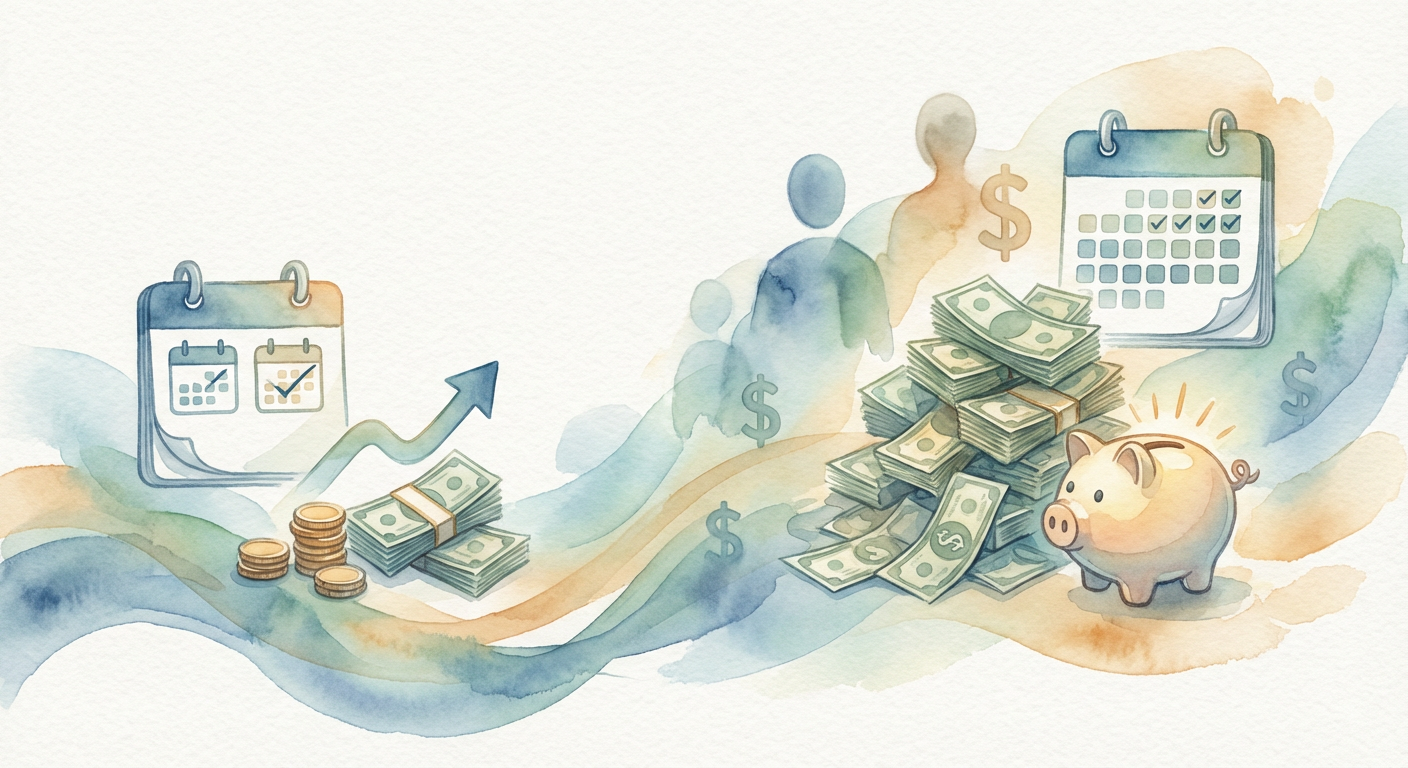
I Tracked Every Dollar for 60 Days and the AI Made Me Face Myself

The Experiment Begins

I’ve always been one of those people who says they’re “pretty good with money.” You know the type. I have a checking account, I pay my bills on time, I don’t carry a balance on my credit card. At least not most months. I figured I was doing fine, honestly. So when YNAB rolled out their new Reflection feature in the fall of 2025, which uses AI to automatically categorize your spending and generate these weirdly personal monthly summaries about your financial personality, I thought it would be amusing. A fun little tech experiment. Something to maybe write about.

I Tracked Every Dollar for 60 Days and the AI Made Me Face Myself

I wasn’t prepared for what it would actually show me.

The setup was straightforward. I linked my accounts, let the AI do its thing, and committed to tracking every single transaction for 60 days. And I mean everything. The three-dollar coffee. The impulse bookstore visit. The “I’m tired and don’t want to cook” delivery order at ten PM. All of it. I thought I knew what I’d find. Spoiler: I didn’t.

What the Numbers Actually Said

Two months of data doesn’t sound like much until you see it laid out in front of you. The AI didn’t judge, which somehow made it worse. It just categorized and summarized with this unsettling neutrality. One category in particular stopped me cold: discretionary spending. The stuff that wasn’t rent, wasn’t utilities, wasn’t truly necessary. I’d estimated maybe fifteen percent of my monthly income went there.

The actual number was thirty-one percent.

Thirty-one percent. That’s nearly a third of my money going toward things I didn’t plan for, didn’t remember half of, and couldn’t quite justify when I saw them all lined up. The delivery orders alone were shocking. When they’re individual transactions spread across two months, they feel manageable. When they’re aggregated into one line item labeled “Convenience Food,” they look less like occasional treats and more like a habit I’d been ignoring. The coffee runs had their own moment of reckoning too. I drink coffee most days. Most expensive days, apparently.

What got to me wasn’t the shame, though there was plenty of that initially. It was the recognition that I’d been lying to myself in the most mundane way possible. Not dramatically, not criminally, just casually. The way you might tell yourself you’re eating healthy while eating salad with a pint of ice cream for dessert. The lie felt smaller than it was.

The Humiliation Was Educational

Here’s what I wish someone had told me: you have to let yourself feel bad about this stuff for a minute. People online will tell you not to shame yourself about spending, and they’re right in theory. But there’s a difference between shame and clarity. Shame is useless and sticky. Clarity just stings at first.

I looked at the data and had to confront the fact that I’d been operating with a story about myself that wasn’t true. I’d built an identity as someone financially responsible, and then I’d spent thirty-one percent of my income on discretionary stuff without ever acknowledging the pattern. The AI didn’t do anything miraculous. It just made the invisible visible. It’s surprisingly humbling to realize your own brain has been doing math you wouldn’t approve of.

The Financial Health Network reported in 2025 that forty-three percent of Americans describe themselves as “financially vulnerable,” the highest number they’ve recorded since they started measuring. That statistic kept running through my head while I stared at my own numbers. I’m not in that category by their definition, but I was vulnerable to my own self-deception, which felt like a different kind of reckoning.

What surprised me was that the hard part wasn’t seeing the numbers. The hard part was not immediately swerving into some extreme correction mode. My instinct was to swing all the way to the other side, to cut discretionary spending to nothing, to punish myself via austerity. That impulse felt familiar and wrong. I had to sit with it.

The Data Changed How I Actually Behave

Here’s where the story becomes less about humiliation and more about what happened next. After I spent a week feeling appropriately horrified, I started reading YNAB official feature announcements and user data about how other people had handled similar discoveries. Turns out there’s research on this. A 2025 study from Intuit found that sixty-five percent of Americans who stick with budgeting apps for ninety days reduce their discretionary spending by an average of nineteen percent. That’s not punishment territory. That’s reasonable adjustment.

It turns out that new YNAB users save an average of six hundred dollars in their first two months and then six thousand dollars over their first year when they actually engage with the tracking process. Those aren’t people who cut everything. They’re people who got honest about what they were doing and then made small, sustainable changes.

I’m only two months in, so I’m not hitting those savings numbers yet. But I did something that felt more important: I reset my relationship with the discretionary spending category. Instead of pretending it didn’t exist or making it my enemy, I acknowledged it. I moved it from thirty-one percent to twenty-four percent over the next month, not by depriving myself, but by being actually conscious about choices. The difference between choosing a coffee and autopiloting to the cafe is bigger than it sounds. Same with delivery. Sometimes it’s the right call. I just needed to know I was making it rather than discovering it in my bank statement three weeks later.

Why I’m Telling You All of This

I’m showing you my numbers because I think a lot of us are walking around with the same quiet delusion. We’re doing better than average, we’re not drowning in debt, we’re managing. And maybe we are. But maybe we’re also just not looking too closely. The average American household was carrying ten thousand, four hundred seventy-nine dollars in credit card debt as of late 2025. That’s real. That’s a thing happening. But the thing that gets me isn’t the statistics. It’s the possibility that you, reading this, might have your own version of this story hiding in your own numbers.

The Reflection AI feature was supposed to be a convenience tool. Automatic categorization, personality summaries, that sort of thing. What it actually became for me was a mirror. Not a harsh one, just an accurate one. It showed me what I was doing without the filter of how I preferred to see myself.

You don’t need an AI feature to do this for yourself. You just need honesty and maybe sixty days of paying attention. The Financial Health Network 2025 U.S. Financial Health Pulse shows that most of us are in some state of financial vulnerability, regardless of income level. We’re all working with incomplete information about our own behavior. All we’re really doing here is trying to complete the picture.

So I’m curious. What number would you find if you actually tracked everything? What’s the category that would surprise you? I’m not asking to shame you. I’m asking because I’m pretty sure you’d be in good company, and sometimes that makes the reckoning feel less lonely. Let me know what you find.

Posted in Uncategorized | Comments Off on I Tracked Every Dollar for 60 Days and the AI Made Me Face Myself

I Tried the Mediterranean Longevity Protocol and Only Failed Most of the Time

Why I Started This Mess in the First Place

You know that feeling when you stumble onto something that actually sounds worth trying? That’s what happened to me in January when the headlines started rolling in about the PREDIMED-Plus trial. Researchers had spent five years watching people follow a specific version of the Mediterranean diet paired with exercise and cognitive training, and they found a 24% reduction in major cardiovascular events. Not marginal. Not something you squint at and shrug. Twenty-four percent. The PREDIMED-Plus trial results in The Lancet weren’t exactly quiet about it, and neither were my friends, who kept texting me links like I’m supposed to live forever now.

I’m not naturally the type to jump on a protocol. I’m more of a “eat what sounds good and hope it works out” person. But something about this one felt different. Maybe it was the specificity. Maybe it was that real people in real labs had actually measured this thing over years, not months. Or maybe I was just tired of feeling like I was leaving longevity on the table because I couldn’t be bothered to think about dinner before 5 p.m.

So I decided to give it an honest, messy try for eight weeks and actually write down what happened. Not the highlight reel. The real version.

Week 1-2: The Optimism Phase

The protocol itself isn’t complicated on paper. Energy-reduced Mediterranean diet, which means roughly 40% of calories from vegetables, legumes, nuts, and whole grains. Olive oil as the primary fat. Fish a couple times a week. Red meat almost never. Plus daily movement and some cognitive exercise. Simple enough that I didn’t need to buy seventeen kitchen gadgets or join a cult.

Week one, I was a machine. I meal-prepped on Sunday like someone who had their life together. Roasted vegetables with chickpeas, drizzled in olive oil. Whole grain pasta with white beans and tomatoes. A small fillet of salmon on Wednesday. I was basically living in Sardinia in my head. The Blue Zones 2025 research and dietary findings had identified places where people still ate this way naturally, where plant foods made up over 70% of daily calories, and I was feeling like maybe I could join them, at least spiritually.

By day five, I noticed something unexpected. I wasn’t hungry in that sharp, nagging way I usually am by afternoon. My energy felt steadier. No 3 p.m. crash where I’m staring at the ceiling wondering if coffee counts as a personality trait. I was feeling smug. Dangerously smug.

Week two, reality showed up. I had a work dinner on Thursday. Everyone ordered steak. I ordered the salmon and a salad and felt like I was being brave about it. Then Saturday morning, I woke up wanting a breakfast sandwich with egg and bacon so badly I could taste it. I made one. It was transcendent. I told myself the Mediterranean protocol was more of a guideline anyway. Guidelines are flexible, right?

Week 3-5: The Honest Middle

Here’s where things got real. I started noticing something about the American baseline that I’d never quite processed before. I looked at what I’d normally eat in a week, and vegetables and legumes combined made up maybe 12% of my calories. Twelve percent. According to 2025 USDA data, that’s exactly where most of us land. Meanwhile, the people in these longevity studies were hitting 40% without turning it into some kind of deprivation show. That’s not a minor gap. That’s the gap between casual eating and actually optimizing your life.

So I recalibrated. Not perfectly. I wasn’t going to become the person who brings a kale salad to parties. But I started being intentional about the math in a way I hadn’t been before. I’d eat a normal lunch and then make sure dinner was predominantly vegetables and legumes. A big bowl of lentil soup. Roasted cauliflower and white beans with herbs. These things turned out to be cheaper than I expected and took less time than the usual rotation of chicken breasts and rice.

Week four is when I noticed the mood thing. And I’m not someone who usually tracks mood. I’m pretty neutral by temperament, the kind of person who can watch a sad movie and feel mildly pensive and that’s it. But I realized I’d stopped having that low-grade background anxiety that usually sits with me. The kind you don’t notice until it’s gone. A 2025 meta-analysis covering 32 studies had found that Mediterranean diet adherence was linked to a 33% lower depression risk compared to typical Western eating patterns. I wasn’t depressed to begin with, but I was maybe experiencing what non-depressed feels like when it’s not competing with inflammation or blood sugar swings.

Then I got sick in week five, and I ate whatever was easy. Cereal. Toast. Chicken nuggets that probably shouldn’t legally be called chicken. My point is I’m human and humans are inconsistent.

Week 6-8: The Actual Pattern Emerges

By the sixth week, I stopped thinking of this as “being on the protocol” and started thinking of it as just how I was eating now. Not all the time. I still went out for pizza. I still had my breakfasts where I wanted carbs that didn’t come from whole grains. But the default shifted. When I’m cooking at home, which is most of the time, I’m building meals around vegetables and legumes first and adding other things second. It turns out that’s a completely different way of thinking about food than what I’d been doing.

The olive oil situation got funny around week seven. I’d noticed that olive oil consumption spiked dramatically across the country in early 2026, with imports up 28% in the first quarter alone according to trade reports. Everyone and their cousin suddenly wanted good olive oil. I got two bottles. They’re still mostly full because it turns out you don’t actually need that much once you’re not treating it like liquid gold that needs to justify its cost through sheer volume.

I lost some weight. Not a dramatic amount. Maybe six pounds over eight weeks, which is basically the speed at which your body is supposed to change if you want it to actually stick around. My resting heart rate dropped enough that my watch noticed and sent me a little congratulatory notification, which felt absurdly good.

The Honest Recommendation

Here’s the thing about the Mediterranean longevity protocol, at least in my experience. It’s not actually that hard once you stop thinking of it as a restriction and start thinking of it as addition. You’re not giving things up so much as you’re making room for things that turn out to matter more than you thought.

I’m recommending this specifically to people who suspect they might be optimizing for the wrong things. People who eat fast and distracted because that’s just what everyone does. People who want to feel better but aren’t desperate enough yet to overhaul everything. People who like efficiency and actually like knowing there’s data behind what they’re doing instead of just guessing.

I’m not recommending it to people who are already eating well and feeling great. And I’m definitely not recommending it as some magical thing that’ll fix your life. It won’t. But it might be the kind of thing where you look back in a year and think, huh, I stopped feeling like my body was working against me.

If you’ve tried this too, I’d genuinely like to know what you noticed. What stuck around after the initial phase. What was harder than expected. Tell me which part of the protocol felt like a lie and which part felt like you’d finally figured something out.

Posted in Uncategorized | Comments Off on I Tried the Mediterranean Longevity Protocol and Only Failed Most of the Time