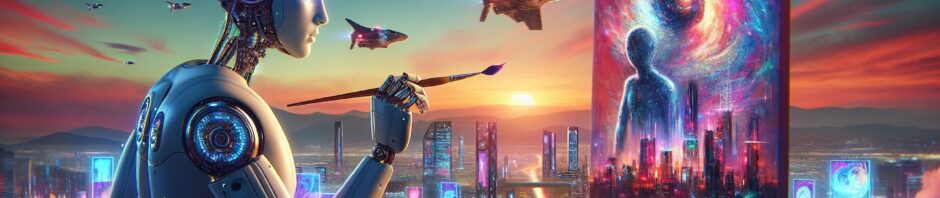
Imagine a world where Picasso, Rembrandt, and Da Vinci are joined by algorithms at the velvet ropes of art galleries. Well, you don’t have to imagine too hard because we are already living it! With technology advancing at warp speed, artificial intelligence (AI) has rolled up its digital sleeves and entered the art scene, turning lines of code into strokes of genius. Grab a cozy seat, maybe a latte, while I explore this wild ride where pixels meet paint.
From Code to Canvas: How AI Picks Up the Brush
Remember when an AI beat the world chess champion? That moment went way beyond tech circles. It showed us AI could handle real intelligence, not just number crunching. Now those same deep learning networks have moved past cold chess logic and into the messy, beautiful world of artistic expression.
Neural Networks and Art
Neural networks learn like artists do, sort of. They study thousands of paintings to understand style, technique, and how light plays with shadow. Here’s what blows my mind: an AI trained on Renaissance paintings can apply Caravaggio’s chiaroscuro techniques to create completely new compositions. Nobody’s eyes have seen these before. It’s weird and brilliant at the same time.
Artists vs (or with) the Machine
Let’s be honest about the tension here. Traditional art has always been about mentors guiding students through years of practice. Human learning curves. Blood, sweat, and charcoal under fingernails. With machines, everything changes. Instead of years squinting at sketchpads, we’re counting GPU cycles. Want Van Gogh’s ‘Starry Night’ style? Click. Done in seconds.
But Van Gogh didn’t create those swirling stars in seconds. Machines can copy styles, but the soul behind the original? That’s still light-years away. Or maybe just moments away, depending on who you ask. Many artists are choosing collaboration over competition, mixing their human creativity with AI’s technical flair. Think Salvador Dali meets spreadsheet formulas.
The New Renaissance: Opportunities and Challenges
AI isn’t just changing how art gets made. It’s reshaping the entire creative economy.
Art for Everyone
Here’s something interesting: AI tools are pretty democratic. A teenager with a scratched laptop can now create art that hints at Van Gogh or Picasso. Price doesn’t always equal ability anymore, which tech has been proving for decades. Companies like OpenAI are making these tools accessible, opening doors that used to be locked behind art school tuition and years of training.
This gives new artists a chance to experiment and established creators some competition. Shelf life in the art world isn’t what it used to be.
Will AI Take Over? Probably Not
AI gets a lot of hype, but let’s keep things in perspective. These algorithms create interesting patterns and can mimic existing styles pretty well. They can surprise us with unexpected combinations. But they’re not replacing human artists anytime soon. They’re more like very sophisticated tools that happen to work really, really fast.
The Tricky Stuff Ahead
Of course, it’s not all smooth sailing. We’re dealing with some thorny ethical questions here. Who owns art created by AI? What happens when an algorithm gets trained on copyrighted work? If an AI creates something amazing, does the credit go to the programmer, the person who prompted it, or the machine itself?
These questions don’t have easy answers. The legal system is still catching up to what’s technically possible. Artists are worried about their work being used without permission to train new models. Museums are figuring out how to authenticate and display AI-generated pieces. It’s messy, complicated, and probably going to stay that way for a while.
Conclusion: Code for a Colorful Tomorrow
We’re living through something pretty remarkable here. This partnership between human creativity and machine capability is creating art that neither could make alone. Sure, there are problems to solve and questions to answer. But watching AI learn to paint feels like witnessing the birth of a new kind of creativity.
The art world has always adapted to new tools and techniques. Photography didn’t kill painting. Digital art didn’t replace traditional media. AI won’t eliminate human artists either. It’s just adding another brush to the palette, albeit a really smart one that never gets tired and works at the speed of light.
What comes next? I honestly don’t know, and that’s part of what makes this so exciting to watch unfold.