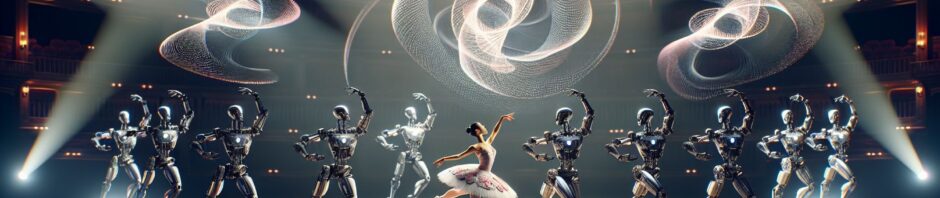
Hey, fellow tech enthusiasts! Today, I’m excited to explore the world of Artificial Intelligence and Creative Arts. Whether you’re a coder, an artist, or somewhere in between, there’s something fascinating about seeing AI try its hand at creativity, isn’t there? Over the past few years, we’ve seen some impressive advances where algorithms end up in galleries next to human creations. So, grab a cup of coffee, sit back, and let’s explore this interesting blend of technology and art.
The Digital Paintbrush: AI Paints a Picture
Let’s start with how AI has entered the world of painting. Remember that feeling when you see detailed brushstrokes and wonder how artists find their inspiration? Well, AI can do something similar now. Using Generative Adversarial Networks (GANs), systems like DeepArt analyze existing artwork and create something that looks surprisingly original. Even Picasso might be curious!
Traditionally, creating art requires introspection, experience, and maybe a touch of existential questioning. While AI doesn’t ponder its existence (yet), it processes millions of data points to mix learned styles and create new visuals. Take Google’s DeepDream, for instance. It showed up with its trippy visuals that put eyes on trees and patterns on everything. Instead of being nightmarish, it opened our eyes to how complex AI creativity can be. I mean, who needs psychedelic experiences when your computer can deliver this?
Music Composed by Silicon Soul
Now let’s move into another dimension: the world of sound. Music! Here’s where AI picks up its electric guitar, or should I say algorithmic synthesizer, and starts jamming. AI in music isn’t just about creating mechanical tunes that loop endlessly. Imagine a late-night jazz session where the human musicians leave but an AI keeps the crowd moving. It’s thrilling yet feels oddly… soulful.
OpenAI’s MuseNet, an AI model that composes extended musical pieces, plays with harmonies in ways that are unexpectedly warm and genuinely creative. The result might remind you of Mozart breaking into a pop ballad—shocking and harmonious at the same time. If computers ever become self-aware, they might prefer bebop over binary code.
But is this revolutionary or problematic? Some composers feel protective of their territory. The act of creating music becomes not just a creative exercise but a battleground with AI’s knack for melody-making precision. There’s growing concern about machines encroaching on human creativity in music composition. Will there be a Beethoven 2.0? Maybe—but like music itself, only time will tell!
Pixels that Speak: AI in Writing and Storytelling
With writing (and here’s where I have mixed feelings), AI doesn’t stop at simple tasks—it goes much further. Predictive text already shows us glimpses of this capability, but AI’s ability to create compelling stories is both impressive and unsettling. Tools like OpenAI’s GPT have written text with surprising originality, leading to heated debates about machine-generated content.
AI captures patterns in human language almost eerily well. It can echo human writing with remarkable elegance, producing flowing prose that can genuinely captivate readers. The underlying language models create impressive fragments that go far beyond typical auto-complete suggestions. While the results aren’t always perfect, they often impress with their ability to weave tales that spark the imagination.
The question remains: when AI writes something moving, who deserves the credit?
Sculpture Meets Circuitry
Physical art presents unique challenges for AI, but robotics is making inroads here too. We’re seeing AI-guided robotic systems that can carve, mold, and shape materials with precision that rivals human craftsmanship. These systems combine computer vision, machine learning, and precise mechanical control to create three-dimensional art.
Companies are developing AI that can work with traditional sculptural materials like clay, stone, and metal. The results bridge the gap between digital precision and physical texture. Some pieces have an almost otherworldly quality—technically perfect yet strangely organic. It’s fascinating to watch a robot chisel away at marble, guided by algorithms that learned from studying centuries of human sculpture.
The Real Challenges
Of course, this isn’t all smooth sailing. There are legitimate concerns about AI in creative fields. Who owns the copyright when an AI creates something? How do we value human creativity in a world where machines can produce art quickly and cheaply? These aren’t just technical problems—they’re fundamental questions about the nature of creativity itself.
Artists worry about being replaced. Critics question whether AI can truly be creative or if it’s just very sophisticated copying. And there’s the bigger philosophical question: if a machine creates something beautiful, does it matter that no human emotion or experience went into it?
I think the answer isn’t simple. AI art tools can be incredibly powerful aids for human creativity, but they also raise uncomfortable questions about what makes art valuable in the first place.
Where We’re Headed
The relationship between AI and creative arts is still evolving. We’re probably not looking at AI replacing human artists, but rather at new forms of collaboration between human creativity and machine capability. The most interesting work might come from artists who learn to work with AI as a creative partner, not just a tool.
What excites me most is seeing how different artists approach these new possibilities. Some embrace AI fully, while others use it sparingly. Both approaches are valid, and both are producing interesting results.
The technology will keep improving, but the fundamental questions about creativity, originality, and artistic value will remain. Maybe that’s the most human thing about this whole story—our need to keep asking these questions, even as the tools change around us.