There’s a specific hush that blankets everything after you hand in your badge. Not the easy quiet of a lazy Sunday with coffee curled in your hands. It’s the muffled stillness of a room you’ve just walked out of—where the conversation you used to steer rolls on without you. I noticed it first in my own living room, still wearing the button-down I’d put on for my final morning at the office. The fabric held onto the smell of fluorescent lights and warm toner. My hands were bare. No laptop bag. No keys to a building I’d never step inside again. Just a question I hadn’t braced for: who am I when nobody’s waiting for my answer?

The Unseen Uniform
For years, I pulled on my profession like a second skin. It wasn’t merely what I did. It was how I introduced myself at parties, the yardstick I used on restless nights, the excuse I gave for the hours I stole from people I loved. When someone lobbed, “So, what do you do?” I had an answer that felt sturdy, a slab of stone I could plant my feet on. Now that stone’s shattered, and I’m learning to balance on shifting dirt.
Nobody sends flowers for this kind of grief. There’s no casserole on the doorstep when you walk away from a career. Friends say, “Congrats on the next chapter!” or “You must feel so free.” And maybe I do, somewhere beneath the layers of loss. But relief and grief aren’t opposites. They can share the same chest, two quiet passengers on a long bus ride. I’ve started to recognize the outline of this mourning. It lives in the missing morning scramble, the sudden drought of emails tugging at my sleeve, the hollow space where the hum of belonging used to be.
The Currency of Belonging
I didn’t grasp how transactional my identity had become until the transactions dried up. Every meeting, every project shipped, every approving nod from a boss—those were deposits into an account marked “Self-Worth.” I walked around with a running balance I could check anytime. Look what I’ve pulled off. Look who counts on me. When the account closed, I felt bankrupt in a way that had zero to do with money.
Psychologists sometimes call it “professional identity foreclosure.” It’s when you commit to a career-shaped self without bothering to explore any other piece of who you might be. That was me. I foreclosed on the other Andrew Jerichos—the one who scribbled poems at two a.m., the one who got lost in building a bookshelf with his hands, the one who could let a whole afternoon drift by without glancing at a notification. I stuffed them into a cramped little room and handed the key to my job title.

The Architecture of After
Over the next few weeks, I started noticing the architecture of my days. The scaffolding was just gone. No mandatory 9 a.m. stand-up. No quarterly reviews. No lunch breaks sliced to the minute between calls. I was a building with nothing holding me up, and I had to figure out how to stand straight on my own. Some days I couldn’t. I’d sleep till noon and then get flattened by a guilt so heavy it pinned me deeper into the mattress. Other days I’d fill every hour with frantic little tasks—reorganizing the garage, scrubbing the fridge coils, anything to cobble together a sense of purpose from scratch.
It’s tempting to slap the word “reinvention” on this. That term gets tossed around like rice at a wedding. But reinvention suggests a clean break, a before-and-after shot where the new version shines. What I’m living is messier. It’s a slow dig. I’m sifting through the wreckage of the guy I used to be, picking up fragments, trying to decide what to keep and what to bury for good.
The Questions Nobody Asks
We talk endlessly about career transitions as strategic moves. Networking, upskilling, personal branding. But we almost never sit with the quieter questions: What do you miss about the person you used to be? Which dreams did you trade for that paycheck? How do you grieve a version of yourself the world no longer recognizes? These are the ones I’m sitting with now, cross-legged on the floor of my own uncertainty.
I miss the shorthand. The way my colleagues and I could communicate with a quick glance across a conference table. I miss the rhythm of untangling a problem, the little dopamine hit of a crisis averted. In a twisted way, I even miss the stress, because stress was proof that I mattered. Without it, I sometimes feel like a ghost drifting through rooms where nobody needs me.
The Witness of Objects
I kept my old business cards. They’re stuffed in a desk drawer, a stack of tiny headstones. Each one carries a name and a title that don’t fit anymore. I can’t bring myself to throw them out. They’re artifacts from a civilization that’s disappeared, and I’m its last surviving citizen. Sometimes I pull one out and run my thumb over the embossed letters. Here lies Andrew Jericho, who once knew exactly who he was.
Objects carry a weird kind of weight. We pour meaning into them, and they become anchors for memory. A study on transitional objects found that adults, not just children, lean on certain items to get through periods of change. For me, those business cards are a bridge between the past and the unsteady ground I’m walking now. I don’t hold onto them out of plain nostalgia. I keep them as proof that the man I was actually existed.

The Silence of Sundays
Sundays have become the hardest day. In my old life, Sunday evening held a specific tightness—the anticipation of Monday, the mental rehearsal of the week bearing down. Now Sunday is just Sunday. No emails to preview. No calendar to dread. The silence spreads out like a wide open field, and I can’t tell whether I should break into a run or just lie down in the grass and wait for something to find me.
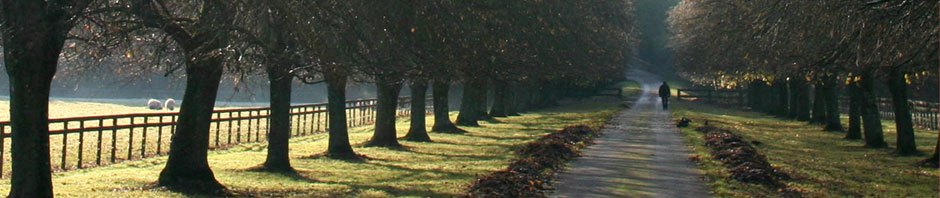
I’ve started taking walks during those hollow hours. No destination. I just let my feet choose the turns. I notice things I never registered before: the way light sifts through a neighbor’s oak, the sound of a basketball bouncing in a driveway three blocks over, the smell of someone’s supper drifting through an open window. In my professional life, I was constantly moving toward something—a goal, a deadline, the next rung on the ladder. Now I’m just moving. And maybe that’s alright.
The Work of Unlearning
There’s a kind of labor in leaving an identity behind, and it’s not the sort you can list on a résumé. It’s the work of unlearning. I’m unlearning the belief that productivity equals worth. I’m unlearning the reflex of introducing myself by my job. I’m unlearning the fear that without a title, I’m invisible.
This unlearning doesn’t move in a straight line. Some days I feel a lightness, a freedom I haven’t tasted since I was a kid. Other days I feel a hollow ache, like someone scooped out a piece of my chest and left a cavity. I’m learning to hold both sensations without trying to fix either one. Grief doesn’t ask for solutions. It asks for presence.
The Gifts Hidden in the Rubble
I’m beginning to notice gifts half-buried in the rubble. I’ve rediscovered the pleasure of reading fiction without guilt gnawing at me for “wasting time.” I’ve started cooking elaborate meals just for myself, lingering over the process instead of rushing through it. I’ve sat on my porch and watched a thunderstorm shoulder its way across the sky, never once checking my phone. These small moments feel like quiet rebellions against the cult of busyness I once worshipped.
I’m also noticing who sticks around. When you leave a profession, you lose more than a job. You lose a community. Some connections were built entirely on shared work, and without that glue, they crumble fast. Others deepen in surprising ways. A former colleague called me last week—not to talk shop, but to ask how I was actually doing. We talked for two hours. I cried. She just listened. That phone call meant more than any performance review ever did.
Telling a New Story
We’re storytelling creatures. We make sense of our lives through narrative. For so long, my story was a career story: I’m a [title] at [company], and here’s what I do. Now I’m writing a new one, and the page is terrifyingly blank. I get to decide what goes on it. I get to decide who the main character actually is.
This isn’t a midlife crisis. It’s a midlife reckoning. I’m asking the questions I dodged for years because I was too busy to face them. What do I actually care about? What kind of person do I want to be, not just what kind of professional? How do I want to spend the hours I’ve got left? These questions don’t come with easy answers, but asking them feels like a small act of courage.
The Permission to Mourn
I’m giving myself permission to mourn. Not just the loss of a paycheck, but the loss of an identity, a community, a rhythm, a sense of direction. This grief is as real as any other, and it deserves to be honored. I’m learning that healing doesn’t mean moving on cleanly. It means folding the loss into the person I’m becoming. I’ll always carry the ghost of my professional self. But he doesn’t have to haunt me. He can walk beside me, a quiet companion, reminding me of the ground I’ve covered.
If you’re standing in the rubble of your own former identity, I see you. The silence is loud, and the questions are heavy. But you’re not invisible. You’re not less-than. You’re a human being in the middle of a transition, and that’s one of the bravest things a person can be. The grief won’t last forever. But the wisdom it leaves behind? That might.
Frequently Asked Questions
How long does it take to stop grieving a professional identity?
No one can hand you a calendar. For some, the sharp edge of loss softens after a few months. For others, it hangs around for years. What actually matters is letting yourself feel the grief without slapping a judgment on it. I still hit hard days, but they don’t come every day anymore. The waves roll in less often, and when they do, I’m learning to swim through them instead of drowning.
Is it normal to feel guilty about leaving a career?
Absolutely. Guilt often shows up during a big transition, especially if you wrapped your whole identity around your work. You might feel like you abandoned your team, your mission, or a version of yourself you fought hard to build. Try to see that guilt as a sign of how seriously you took your commitments, not as a final verdict on your choice. You’re allowed to walk a new path, even if it means leaving older parts of yourself behind.
How can I rebuild my sense of self after leaving a profession?
Start with something small. Pick up a hobby or interest you shoved aside years ago. Spend time with people who know you beyond your job title. Jot down the parts of your identity that have nothing to do with work. Over time, you’ll start glimpsing yourself as a whole person, not just a professional label. It takes patience, but the self you uncover is often more layered than the one you lost.
What if I can’t stop comparing my current life to my old one?
Comparison is completely natural, especially when you’re grieving. Try to catch the moments when you’re buffing up the past. No career was flawless. No identity was complete. Write down the things you don’t miss—the stress, the burnout, the parts of yourself you had to hide. Then write down what you hope to discover in this new stretch of life. Shift your gaze from what you lost to what you’re still finding.