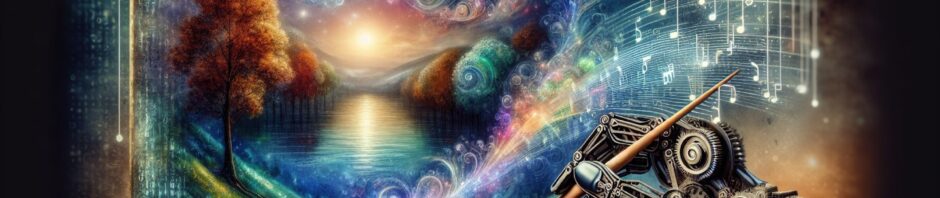
Hello, fellow tech enthusiasts! Have you ever had one of those moments when you find out something new about technology and think to yourself, “Holy moly, we’re living in the future!”? That’s exactly how I felt when I recently stumbled upon the incredible world of AI-driven creativity. No, I’m not talking about AI stirring up complex data visualizations or crafting snappy algorithms to solve your coder next door’s python puzzle. Nope. I’m talking about AI in the arts—painting, composing music, writing poetry, making films—the Darth Vader-robot variety of creative wonders!
AI: The Artistic Apprentice
For those of you new to this techno-renaissance, AI has stepped beyond the dusty borders of factories and algorithms-only labs, sprawling into the artsy society of canvases and musical etudes. Remember those cinematic portrayals where robots would whip around glitzy acrylic boards with stiff fingers turning chicken scratch into a Mona Lisa-like masterpiece? That’s not even future pie-in-the-sky anymore—welcome to today’s reality!
There’s an AI model called DALL-E (brainchild of those creative brains over at OpenAI) that generates eye-catching images purely from textual descriptions. Imagine jotting down “fluffy orange cat high-fiving astronaut in a salsa garden,” and voilà, your quirky masterpiece is ready for all your home décor needs. Trouble choosing between that office cactus and adorable art piece for the corridor display? Now the cactus hardly stands alone because you’re personalizing digital walls like never before!
An Ear for Every Creative Chord
Being present when a robot hums music inspired by centuries-old symphonies blows my mind. Have you tuned in to AIVA yet? She’s not your neighborhood band kid trying to cut through jazz complexities—AIVA is an AI that uses algorithms to create orchestral harmonies even Mozart might tip his professorial wig for!
Composing backing tracks for film scores or generating mood-setting pieces with ease sounds delightful, but how does it work? Well, AIVA processes tons of musical data, learning patterns that help her execute more than just riffs. She creates inventive pitches that surface personalized soundscapes meant to tug at emotions we’ve been exploring since Frankenstein first sparked our imaginations about artificial creation.
Painting Aspirations: More Than Just Child’s Portrait Daubs
The world of AI art goes far beyond simple sketches or basic drawings. We’re talking about sophisticated systems that can analyze artistic styles, understand composition principles, and create works that genuinely surprise even seasoned artists. These AI painters study everything from Da Vinci’s techniques to modern abstract expressions, then generate something entirely new while drawing inspiration from centuries of human creativity.
The Creative Collaboration Question
Here’s where things get interesting, and honestly, a bit complicated. When I first saw AI-generated art, my reaction was mixed. Part amazement, part curiosity, and yes, part concern about what this means for human artists. Are we witnessing the birth of a new creative partner, or are we watching machines slowly edge into territory we’ve always considered uniquely human?
The truth is, most AI art today works best as a collaboration tool rather than a replacement. Artists use AI to generate ideas, explore new styles, or create base elements they can then modify and perfect. It’s like having a creative assistant that never gets tired and can instantly try out wild concepts that might take humans hours to sketch.
What This Means for the Future of Art
I’ll be honest—I’m fascinated but also cautious about where this technology is headed. On one hand, AI democratizes art creation in ways we’ve never seen before. Someone without years of training can now create compelling visual pieces or musical compositions. That’s pretty incredible when you think about it.
On the other hand, there are legitimate questions about originality, copyright, and the value we place on human creativity versus machine-generated content. These aren’t easy questions, and I don’t think we have all the answers yet. What I do know is that this technology isn’t going anywhere, so we might as well understand it and figure out how to use it responsibly.