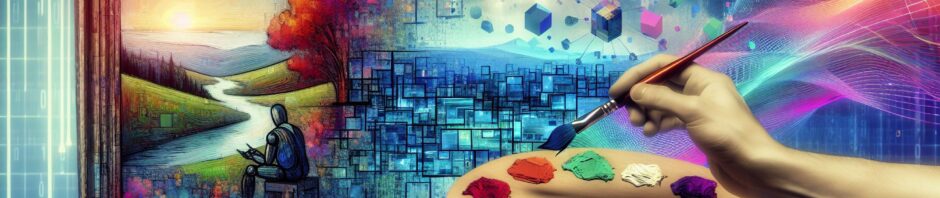
Hey techno-aficionados! Grab your favorite beverage (coffee for me, please!) because today, we’re diving into the delightful world of Artificial Intelligence in creative arts. Yep, that’s right. AI is becoming the unexpected artist of our time. No, it hasn’t donned a beret or started sipping on espressos at Parisian cafés, but AI is quietly changing how we create and consume art. This post is my deep dive into why and how AI is reshaping creativity. Let’s get started, shall we?
Evolution from Code to Creation
When you think “AI,” you’re probably imagining autonomous robots, voice assistants, or even the infamous Skynet. Pretty cool stuff, right? But AI’s artful endeavors might surprise you. From generating music reminiscent of Bach and Beethoven to creating visuals that could make Van Gogh nod in approval, AI is stepping confidently into the creative spotlight.
Recently, OpenAI’s DALL-E (get it, like Salvador Dalí!) has created waves. It’s not some Doctor Who villain, nor a singing marine mammal, it’s all about translating text inputs into visual outputs. Type in “a futuristic city under pastel skies,” and voilà, DALL-E conjures up fantasy landscapes like a digital wizard. It’s pretty amazing how a bunch of data points come together to create something that’s, honestly, quite moving.
AI’s Masterpieces: What’s the Big Deal?
Now, you might ask: “Okay, but why get worked up over AI making art? Human artists have been doing just fine.” Here’s the thing, my friend, AI isn’t just mimicking. It’s innovating and collaborating. Unlike those stuffy gallery openings with pretentious talk about “pure talent,” AI sees art through the lens of patterns, data, and unexpected combinations. It’s a different kind of genius.
Just recently, an AI-assisted art auction at Christie’s broke records. Impressed? Me too! And don’t even get me started about the Portrait of Edmond de Belamy, a piece that sold for a jaw-dropping $432,500. The kicker? Created by GAN models, using algorithms rather than brush strokes. It’s pretty wild how this redefines what we consider art and who gets to make it.
Democratizing the Canvas
We’re moving into an era where anyone with basic computer skills can bring their wild dreams to life. You don’t need years of training in brush techniques or exhaustive knowledge of color theory. AI transforms pixels into limitless possibilities for you. I mean, Grandma Mabel could decide to craft digital landscapes between gardening sessions!
There are tons of tools now that help both experienced artists and complete beginners. AI-powered applications can identify forms, fix problem areas, and offer up design alternatives rooted in everything from 1980s Memphis Design to classical composition. I have to admit, it’s pretty great that designers no longer start projects staring at that panic-inducing blank page. Instead, they get assistance with form discovery and styling guidance straight from AI’s algorithms.
Challenging Traditional Notions of Art
Now here’s where things get interesting! Is AI breaking down our established ideas about what makes art special? Some purists definitely see this as a threat to artistic tradition. They worry that AI’s efficiency is bulldozing over the noble struggle of creation. You know, that whole “art requires suffering” mentality that people love to romanticize.
But here’s what I think: AI isn’t invalidating traditional art. It’s just pushing new boundaries. Why limit ourselves to narrow, rigid definitions when we could be exploring uncharted territory? Instead of worrying about being replaced, maybe we should be asking better questions about what creativity really means.
The Art World of Tomorrow?
What does the future actually look like? I wish I had a crystal ball (maybe AI will make one of those too). Honestly, I think we’re heading toward something completely new. A world where human creativity and AI capabilities blend together in ways we can’t even imagine yet.
Will we see AI collaborating with human artists on massive installations? Probably. Will there be new art forms that only exist because of this technology? Almost certainly. Will some people hate it and others love it? Definitely. But that’s what makes this moment so fascinating. We’re watching art evolve in real time.
The truth is, I don’t know exactly where all this leads. But I do know that creativity has always found a way to surprise us. Whether it’s coming from human hands or algorithm-driven processes, good art still moves people. And bad art, well, it’s still bad art, regardless of who or what made it.