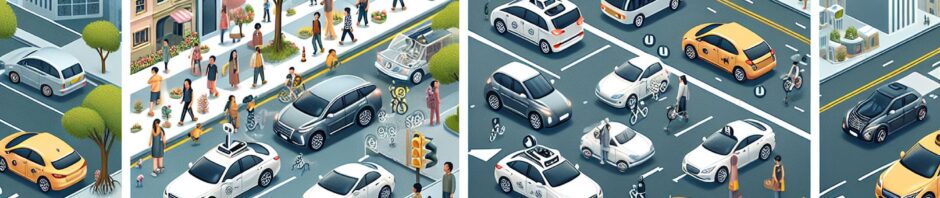
Hey there, fellow tech wanderers! Let’s imagine, for a second, that the very concept of driving becomes as passé as writing a check at the grocery store. I’m talking about self-driving cars, people! Yep, the techno-marvels otherwise known as Autonomous Vehicles (AVs) are swiftly transitioning from science fiction to science fact. I’ve been driving (pun totally intended) through thoughts on this innovation, and I can’t wait to steering-wheel you through the exciting, buzzing world of self-driving cars.
If you’re ready, climb (virtually) into the passenger seat while the AI does the heavy driving—sorry, lifting! Get a caffeine boost stuff because we’re on the expressway to the future of automated commuting.
The Genius Engineering Behind Self-Driving Cars
So, what sorcery has turned the dream of a car that drives itself into a functional, every-life miracle? It’s not smoke and mirrors, but rather sensors, algorithms, and A LOT of data. Imagine if 3D vision became a thing your car could achieve; machines with their equivalent of sight come through LIDAR, radar, and computer vision.
Engineers and geeks extraordinaire have used machine learning algorithms to teach these vehicles how to ‘read’ the road, detect pedestrians, and even identify sneaky squirrels risking it all for nuts. Every experimental mile driven by these automated chauffeurs learns and adapts, making the technology ever-more reliable and replicable.
The whole approach here involves balancing computer understanding with real-time reactions, turning cityscapes into carefully analyzed portfolios of driving data. But how, you ask, can these technologies revolutionize more than just your commute?
A World on Auto-Pilot: The Societal Shake-Up
Moving toward a future where vehicles carry us with minimal or no human intervention isn’t just for tech storytelling or millennial daydreaming. The societal implications could reasonably alter much of what we’ve come to consider the ‘daily grind.’
1. Making the World a Safer Place
Imagine virtually erasing the term “fatality” from car crashes. The World Health Organization would throw a metaphorical champagne party to celebrate. Thanks to self-driving cars that abide by rules (take that, sad-texting-while-driving humans), roads could shift from potential battlegrounds to safe passageways.
In terms of practicality, this means millions fewer injuries, a staggering reduction in hospital costs, and tighter insurance chips in play. It’s big and inevitably, utterly transformative.
2. New Freedoms For Older Generations
What empowers an aging population? Mobility, frank and unchained. Autonomous vehicles give real meaning to ‘comfortable retirement,’ allowing golden years to run parallel to autonomous independence. Granny meets her friends for brunch in town, not with careful planning but practically on a whim. The freedom this gives to people who’ve lost their driving privileges could be life-changing.
3. Cityscapes without Car Clutter
Picture cities without endless rows of parked cars lining every street. When cars can drop you off and go park themselves (or better yet, pick up the next passenger), we suddenly have all this space back. Those parking lots? They could become parks, housing, or community centers.
Cities get to breathe again. Streets become less about storing metal boxes and more about people actually living in them. I’m talking wider sidewalks, bike lanes that don’t feel like death traps, and maybe even some trees. The environmental benefits alone are pretty compelling when you consider fewer cars overall and more efficient routing.
Sure, there are challenges. What happens to taxi drivers? Delivery drivers? How do we handle the transition period when some cars are autonomous and others aren’t? These aren’t small questions, and honestly, I don’t think we have all the answers yet. But the potential changes to how we design and live in cities? That’s pretty exciting stuff.